
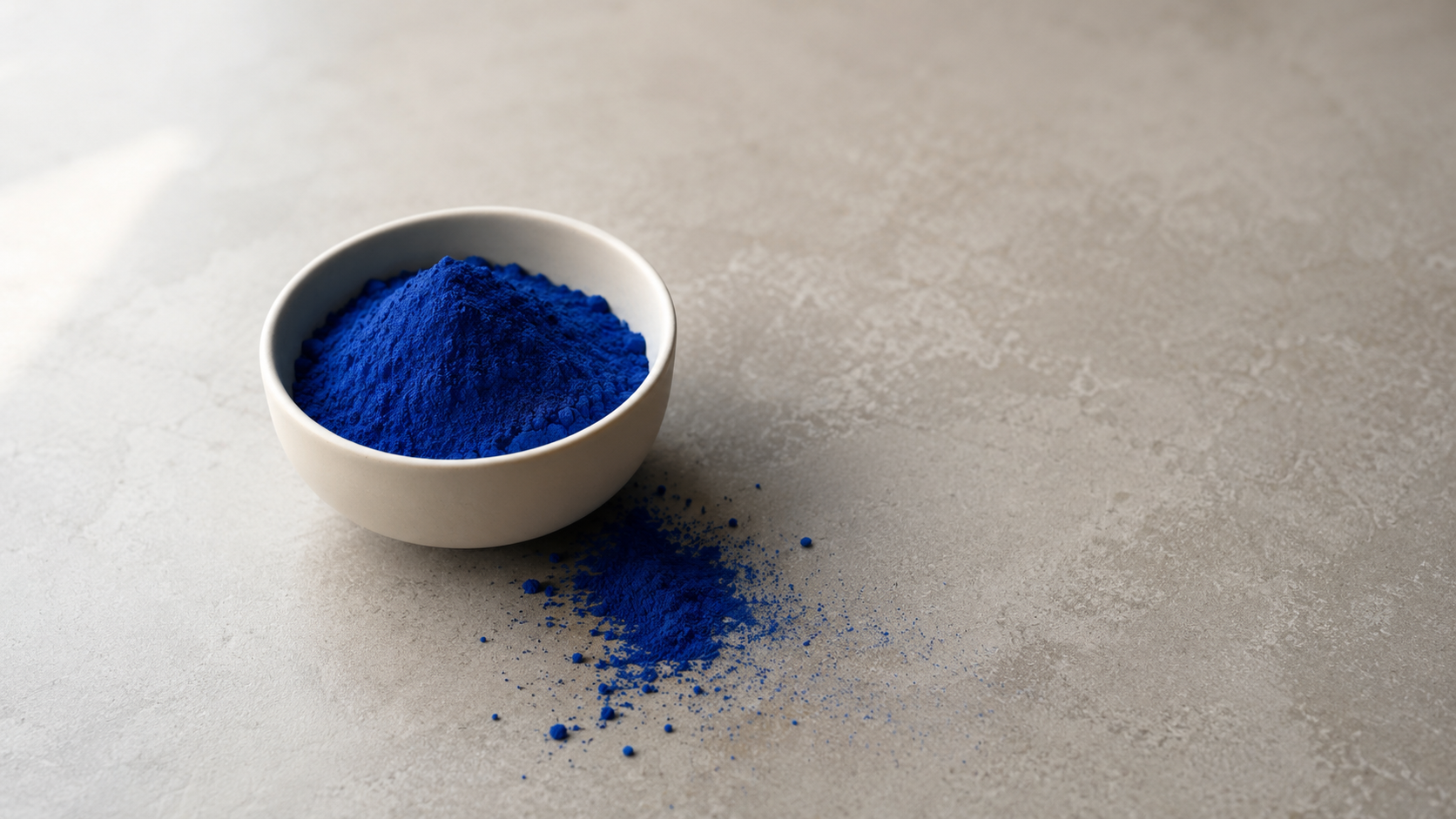
If you have priced phycocyanin recently, you have probably seen this: one supplier lists it at 75 USD per kilogram. Another quotes 550 USD. A third comes in at 700 USD. Same ingredient name. Same blue color. Roughly ten times the spread between the cheapest and the most expensive.
For a formulator under cost pressure, the first instinct is to assume the premium suppliers are simply overcharging for the same thing. That instinct is wrong, and acting on it can cost a brand both regulatory exposure and the very clinical claim it was building the product around.
The 75 USD powder and the 550 USD powder are not the same product. They share a name, a CAS number, and a blue color. They do not share a job. This article explains the difference, walks through what functional formulators should specify when they are buying phycocyanin for skin, nutraceutical, or cosmetic-food applications, and gives you the dose math, regulatory context, and supplier-evaluation checklist you need to make the decision well.
Why phycocyanin is having a 2026 moment
The phycocyanin category is moving fast right now, and the reason is regulatory rather than scientific.
In April 2025, the US Department of Health and Human Services and the FDA jointly announced the phase-out of all petroleum-based synthetic food dyes from the US food supply, with the program targeting elimination of FD&C Green No. 3, Red No. 40, Yellow No. 5 and 6, and Blue No. 1 and 2 by the end of 2026 (later updated to 2027 for some colors). On February 5, 2026, the FDA went further: it formally expanded the authorized use of spirulina extract as a natural color additive and approved beetroot red as a new option.
For food and beverage manufacturers, this triggered an immediate reformulation race. Blue No. 1 in particular has been the workhorse for everything from sports drinks to confectionery. Spirulina extract, which delivers its blue through phycocyanin, has emerged as the most viable natural replacement.
The result: a surge in demand for phycocyanin, a wave of new buyers entering the category for the first time, and a marketplace where colorant-grade and functional-grade product are increasingly listed side by side without clear differentiation. For B2B buyers who are not just trying to color a beverage but actually building a functional claim around the ingredient, this is where the trouble starts.
What phycocyanin actually is
Phycocyanin is a pigment-protein complex produced by the cyanobacterium Arthrospira platensis (commonly called spirulina). Structurally, it is a protein scaffold to which a chromophore called phycocyanobilin is covalently attached through a thioether bond to a cysteine residue. Phycocyanobilin is an open-chain tetrapyrrole, structurally similar to bilirubin, which is the source of much of its biological activity.
In the living cyanobacterium, phycocyanin is part of the photosynthetic light-harvesting machinery, capturing red and orange light that chlorophyll cannot use efficiently. In isolated form, that same chromophore makes phycocyanin both a vivid blue colorant and a free-radical scavenger.
C-phycocyanin and allophycocyanin: not the same molecule
Here is a detail that confuses most first-time buyers. Spirulina actually produces two related but distinct phycobiliproteins:
• C-phycocyanin (C-PC), the more abundant form, accounts for the majority of the blue color and the bulk of the bioactivity documented in the literature.
• Allophycocyanin (APC) is structurally similar but has a slightly different chromophore environment. It absorbs light at a slightly longer wavelength and sits closer to the reaction center in the cyanobacterium's light-harvesting complex. It is present in smaller quantities.
Most commercial phycocyanin products quantify only the C-PC fraction. The assumption is that APC is a contaminant or a minor variant. The most rigorous functional-ingredient products, however, deliver both in a defined ratio, on the basis that the dual-component composition more closely matches what the body actually encounters when consuming the whole organism and that some of the antioxidant and skin-relevant biology depends on both fractions being present together.
This distinction matters when you are reading a supplier's certificate of analysis. A product that only specifies "C-PC content" tells you about color intensity. A product that specifies both C-PC and APC tells you about the formulation's biological intent.
The two phycocyanin markets you must distinguish
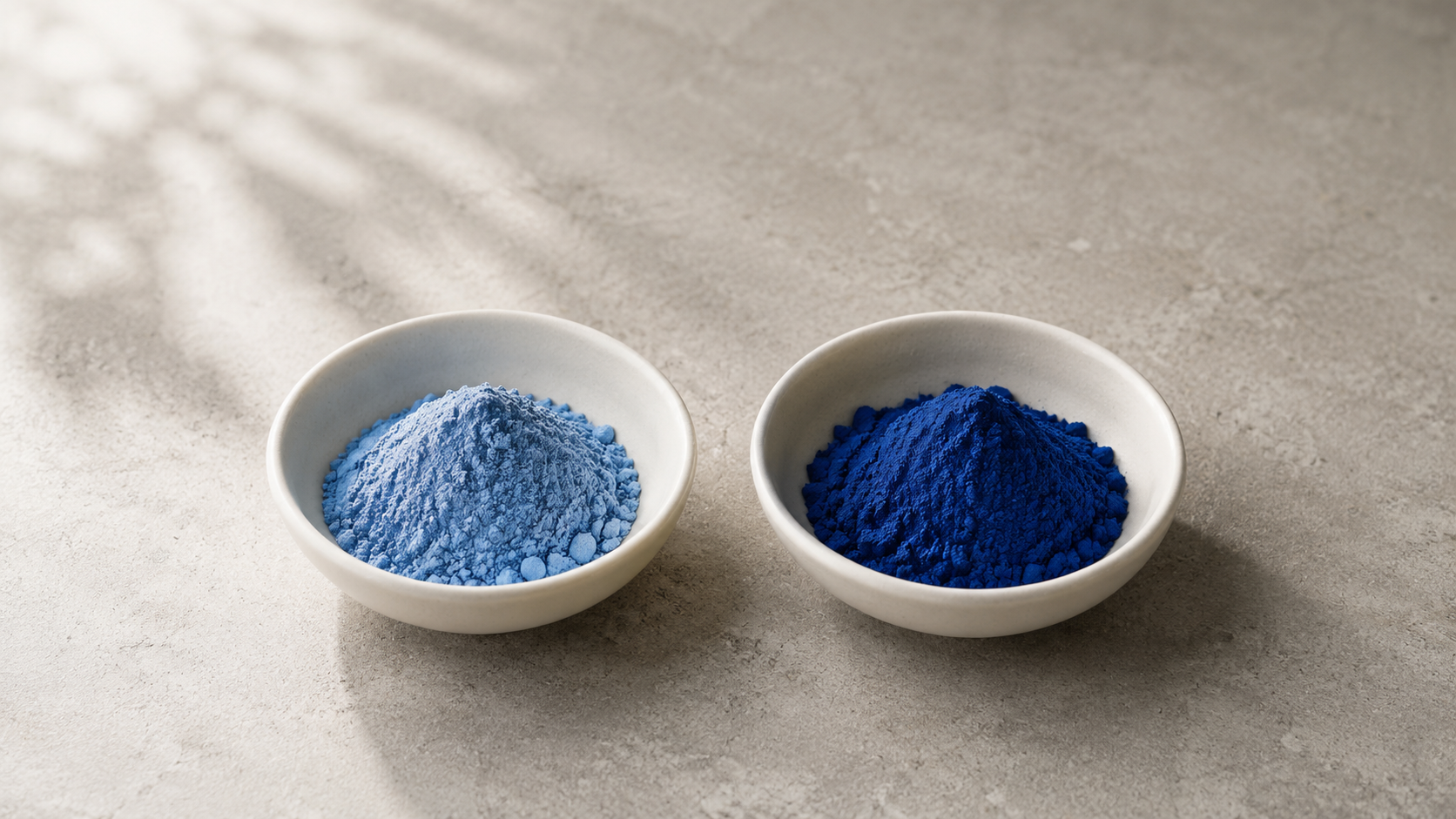
This is the single most important section for any formulator coming into the category. There are two functionally separate markets for phycocyanin powder. They are usually sold under the same name, but they exist for different purposes and they are not interchangeable.

Colorant grade
Colorant-grade phycocyanin is sold according to a purity scale that the industry expresses as an E-number: typically E3, E6, E10, E18, E25, or E40. The E-number is the ratio of absorbance at approximately 618 nm (the peak absorbance of phycocyanin itself) to absorbance at 280 nm (the peak absorbance of total protein and interfering compounds). The higher the E-number, the purer the phycocyanin fraction, and the more concentrated the blue.
• E18 is the most common food-grade specification. It is used in beverages, confectionery, dairy alternatives, and supplements where the goal is color.
• E25 is a higher-purity grade used where stronger color intensity is needed at lower inclusion rates.
• E40 is the highest grade widely produced in China and is sometimes used in higher-end food applications and in some supplements where the supplier wants to claim more bioactive presence, although still without standardized clinical evidence.
Colorant grades commonly use trehalose and sodium citrate as carriers (typically around 30% and 5% respectively), which protect the protein from heat and pH degradation. They are typically sold from Chinese, Indian, and increasingly other Asian manufacturers in the range of 60 to 500 USD per kilogram depending on grade and certification. Their certification packages usually include ISO 22000, HACCP, and basic Halal and Kosher attestations.
What colorant-grade products do not provide is a defined dual-component composition (C-PC plus APC in ratio), a dose-defined daily intake, or peer-reviewed clinical evidence tied to the specific material in the bag.
Functional grade
Functional-grade phycocyanin is a fundamentally different product. It is specified not by color intensity but by:
• A defined composition (typically C-PC at or above 20% by weight and APC at or above 7%, in a documented ratio).
• A defined daily dose tied to a published clinical study performed on that specific composition.
• A documented regulatory pathway for at least one functional claim, in at least one major market.
• A complete safety dossier including acute and chronic toxicity, carcinogenicity assessment, and human safety from the trial.
The leading material in this category comes from a Japanese manufacturer with over 45 years of managed spirulina cultivation, two production patents (one covering the extraction method, one covering the application of phycocyanin in beauty-oriented foods and beverages), and a clinical study on its specific composition published in Japanese Pharmacology and Therapeutics. This is the material that Iizuka Shoukai supplies, typically in the 470 to 750 USD per kilogram range depending on volume, region, and whether the buyer wants the raw powder or an OEM-finished format from our partner plant in Tomioka, Gunma.
Side by side
The following nine attributes summarize the difference between colorant grade and functional grade phycocyanin.
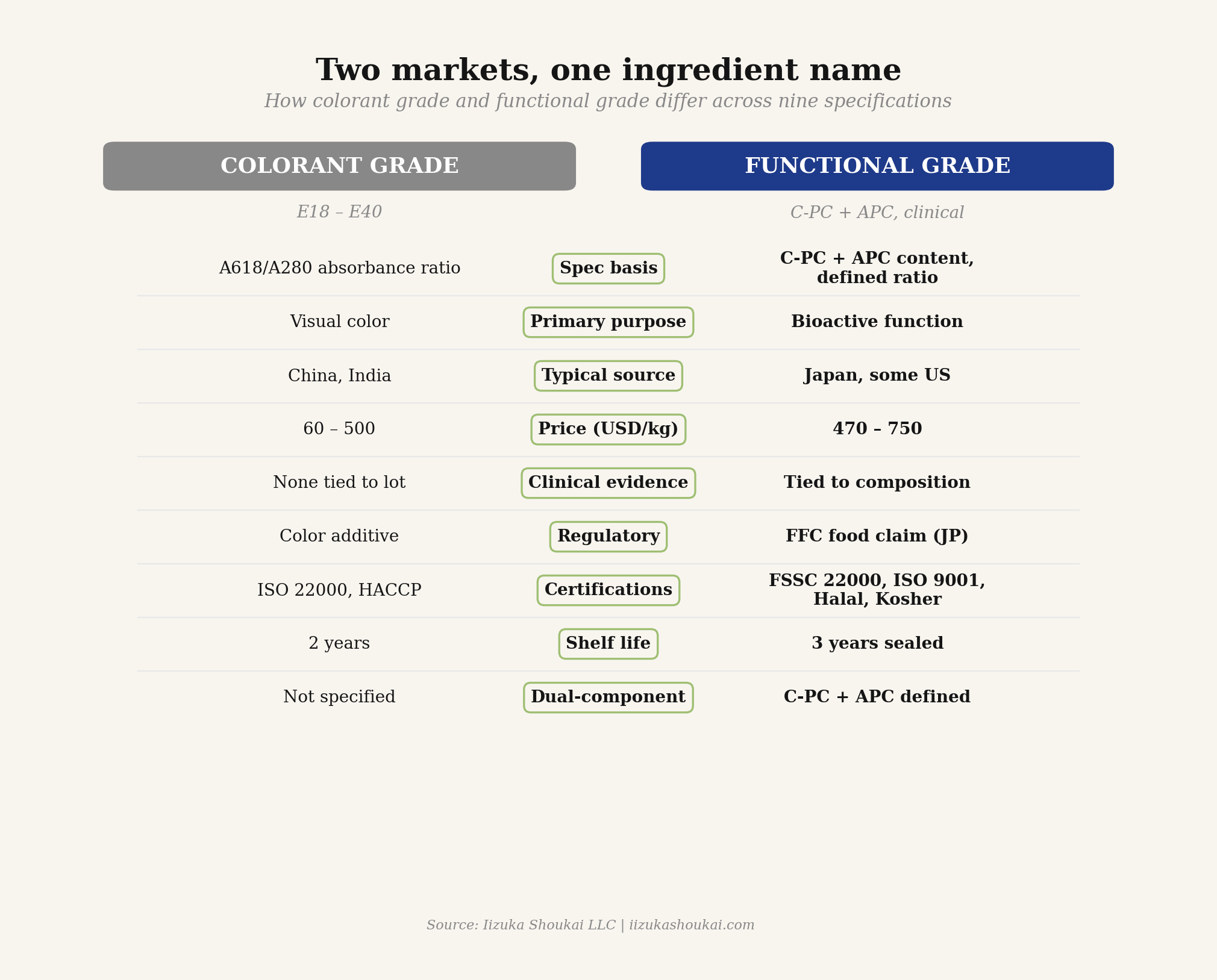
Spec basis. Colorant grade: A618/A280 absorbance ratio. Functional grade: C-PC and APC content, in defined ratio.
Primary purpose. Colorant grade: Visual color in food, beverages, supplements. Functional grade: Bioactive functional ingredient.
Source. Colorant grade: Mainly China, India, some others. Functional grade: Mainly Japan, some US.
Typical price (USD/kg). Colorant grade: 60 to 500. Functional grade: 470 to 750.
Clinical evidence. Colorant grade: None tied to the specific lot. Functional grade: Tied to specific composition.
Regulatory pathway. Colorant grade: Approved as natural color additive. Functional grade: Functional food registration possible (Japan).
Certifications. Colorant grade: ISO 22000, HACCP, some Halal/Kosher. Functional grade: FSSC 22000, ISO 9001, HACCP, Halal, Kosher.
Shelf life. Colorant grade: Typically 2 years. Functional grade: 3 years sealed.
Dual-component composition. Colorant grade: Not specified. Functional grade: Specified (C-PC plus APC).
The trap is straightforward. A buyer who needs functional-grade product but specifies on price ends up with colorant-grade product that may have similar color performance and a fraction of the bioactivity profile. The end formula carries no defensible functional claim. The clinical study referenced on the brand's website was done on a different material than what is now in the bottle.
The clinical evidence behind functional-grade phycocyanin
The clinical foundation that justifies functional-grade specification rests on a body of preclinical work and at least one well-designed human trial.
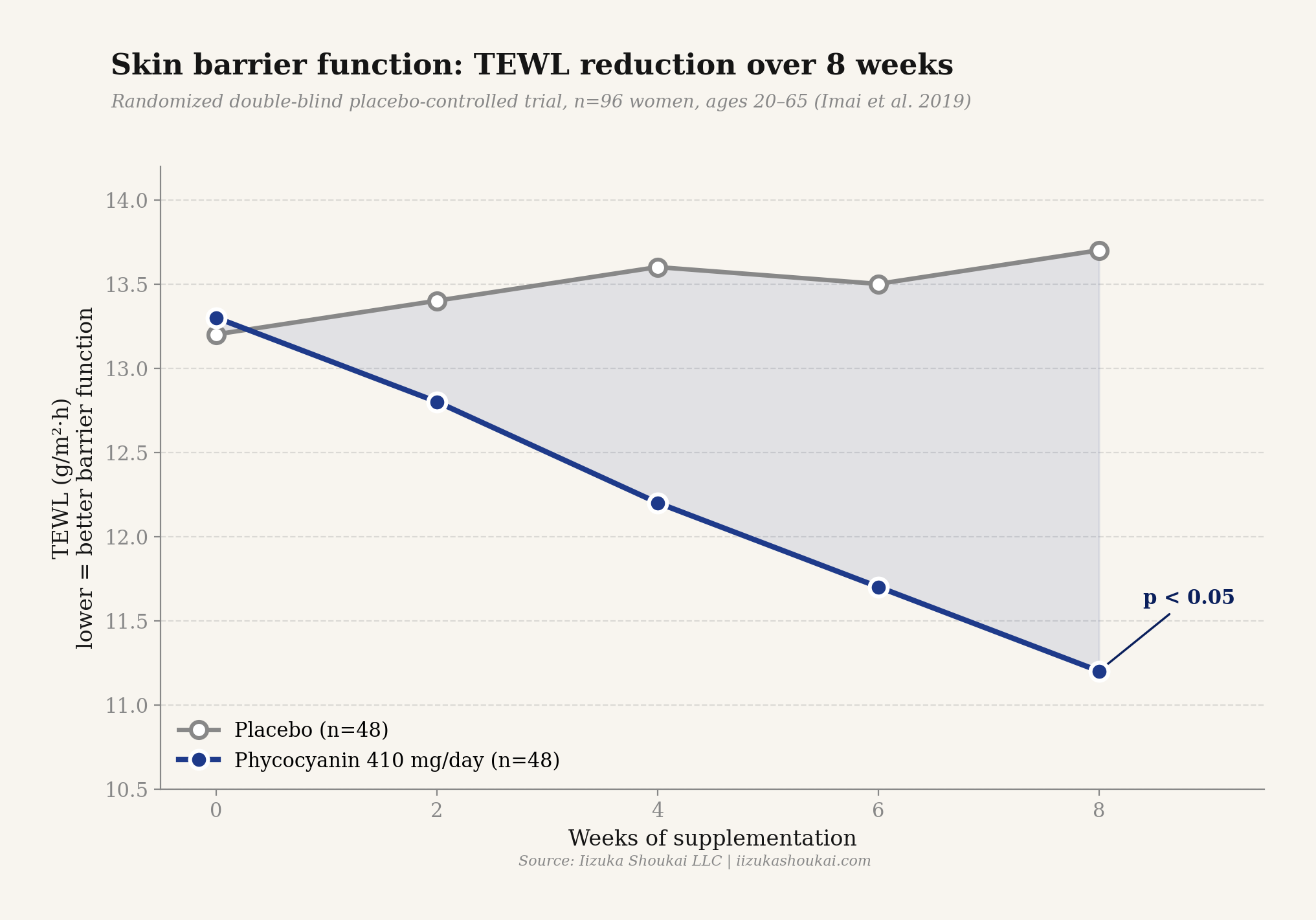
The human trial that anchors the Japanese functional food registration is a randomized, double-blind, placebo-controlled study conducted on 96 healthy adult women aged 20 to 65 years (48 in the phycocyanin arm, 48 in placebo), published as Imai et al. in Japanese Pharmacology and Therapeutics in 2019. Subjects received tablets delivering 410 mg of phycocyanin per day (300 mg C-PC plus 110 mg APC) for eight weeks. The primary outcome was transepidermal water loss (TEWL), an established physiological marker of skin barrier function.
The trial reported statistically significant reductions in TEWL at week 8 (p < 0.05), increases in subjective skin moisture and radiance assessed by visual analog scale, increases in skin firmness measured at week 4 (p < 0.01), and a measurable reduction in maximum wrinkle depth measured by the silicone replica method at week 8 (p < 0.05). No adverse events were reported in either arm.
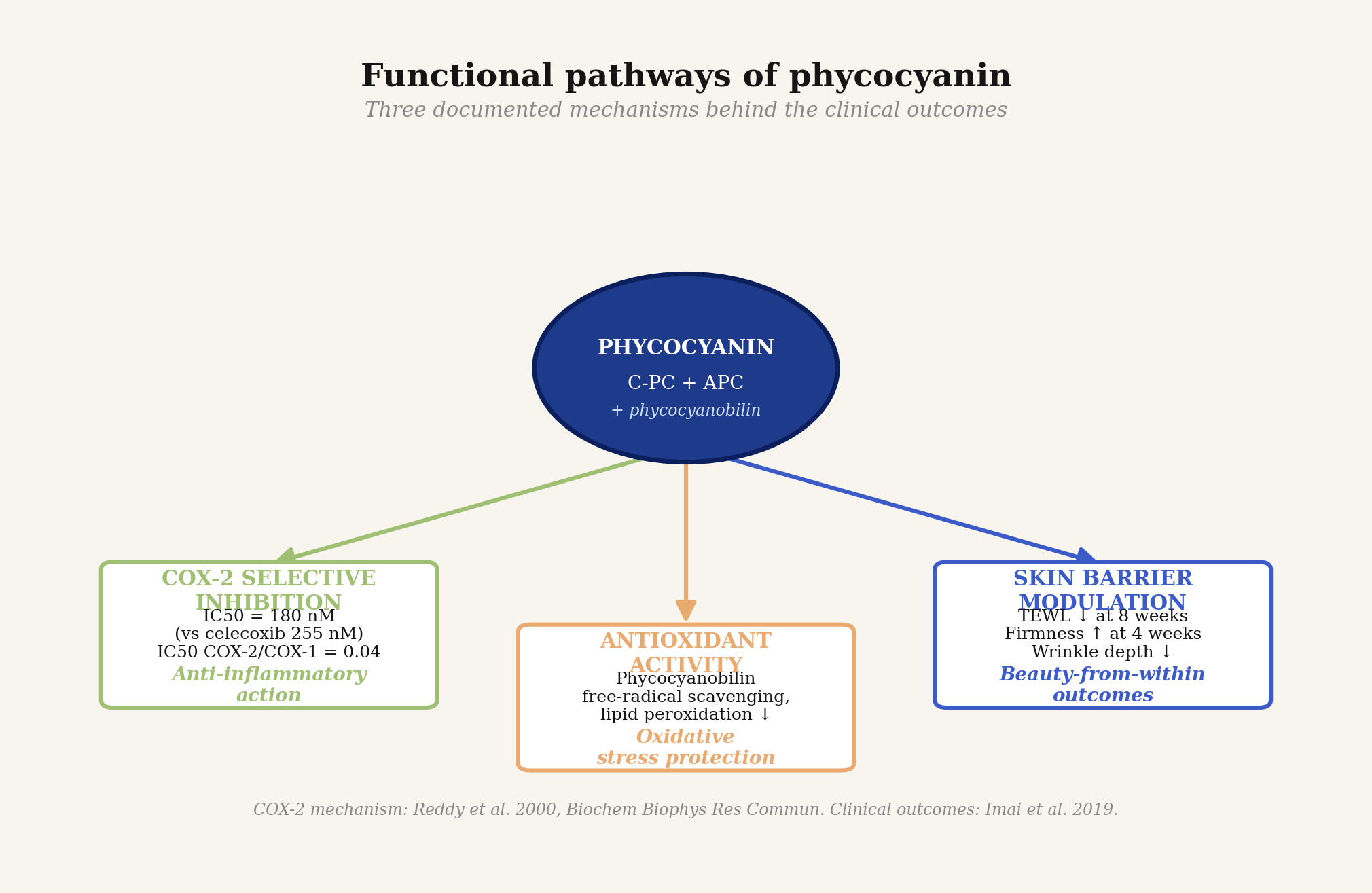
In preclinical work, phycocyanin has been characterized as a selective inhibitor of cyclooxygenase-2 (COX-2) without significant inhibition of COX-1, an antioxidant with documented free-radical scavenging activity through its phycocyanobilin chromophore, and a modulator of multiple inflammation-related signaling pathways. There is also a body of animal work suggesting effects on cholesterol metabolism, neuroprotection, hepatoprotection, and reduction of calcium oxalate crystal deposition in the kidney. These preclinical findings are not yet supported by definitive human trials, but they have informed the broader case for phycocyanin as a multi-pathway functional ingredient.
The point for a formulator is this: when you build a claim onto your product, you are building it on the clinical study you reference. That study was done on a specific material with a specific composition. If your supply changes underneath you, the claim is no longer supported.
A supplier specification checklist
When you are evaluating a phycocyanin supplier for functional applications, the following items separate a serious B2B partner from a colorant reseller wearing a functional-ingredient label.
• Composition specified by both C-PC and APC, not just by E-number or "phycocyanin content." Ask for a typical CoA and verify both fractions are quantified.
• Source organism named explicitly as Arthrospira platensis. Not "blue-green algae," not "spirulina species."
• Cultivation method documented. Indoor or controlled outdoor cultivation in a closed system reduces contamination risk versus open-pond systems.
• Patent and IP background. A serious functional-grade manufacturer will have published patent positions on their extraction method and application. If the supplier cannot show you any IP, ask why.
• A clinical study attached to the specific material, with the trial methodology, sample size, statistical results, and journal citation available on request. A reference to "spirulina has been shown to..." is not the same as "this product, at this dose, has been shown to..."
• Full safety package: LD50 data, chronic toxicity studies, carcinogenicity assessment, microbial limits, heavy metals (especially arsenic, lead, cadmium, mercury), residual solvents, allergen status.
• International certifications relevant to your markets. For Muslim-majority markets, Halal certification from a recognized authority. For Israel and US Jewish markets, Kosher. For broad export, FSSC 22000 or ISO 22000. For Japan, HACCP and ideally J-FOSHU or 機能性表示食品 (functional food) capability.
• Regulatory dossier: at minimum, evidence of GRAS self-affirmation or FDA NDI submission for US, Novel Food assessment for EU as relevant, and TGA listing capability for Australia.
• Shelf life and stability data in the application format you intend to use, not just in the dry powder. Stability of phycocyanin in finished beverages, gummies, and capsules differs substantially.
• Manufacturing volume and supply continuity. Functional formulations require predictable supply over multi-year horizons. A supplier that cannot demonstrate 5+ tons of monthly production capacity should not anchor a brand's flagship product.
If a supplier cannot or will not provide these on request, that is your answer about the grade.
Dose, cost-per-serving, and the math that matters
This is where most cost-pressure decisions break down. Formulators look at the ingredient cost per kilogram and conclude that the premium grade is too expensive. The right number to look at is cost per dose, not cost per kilogram.
The clinically validated dose for functional-grade phycocyanin is 410 mg per day. Over a 30-day supply, that is 12.3 grams of finished powder per consumer per month.
At 550 USD per kilogram, that 30-day supply represents about 6.77 USD in raw ingredient cost.
At 90 USD per kilogram (an E18 colorant grade), the same 30-day supply represents about 1.11 USD in raw ingredient cost.
The difference is roughly 5.66 USD per consumer per month at the ingredient level. For a product retailing at 40 to 80 USD per month, that 5.66 USD represents between 7% and 14% of the retail price. In return, the brand gets:
• A clinical claim tied to the actual material in the bottle.
• A regulatory dossier that survives audit in Japan, the Gulf, the EU, and Australia.
• A safety package that accelerates regulatory clearance in any new market.
• Defensibility against competitor claims and litigation around ingredient substitution.

The colorant-grade product saves the 5.66 USD and loses everything else. For a brand that is building a category-leading functional product, this is rarely a good trade.
A second math point worth surfacing: for an OEM-finished format produced at our Tomioka facility, the ingredient cost is the same 6.77 USD per 30-day unit, with processing and packaging adding roughly 4 to 7 USD per unit depending on format (sticks, sachets, or capsules). At a wholesale price of 25 to 35 USD per unit to brand partners, this puts the OEM model at roughly 40 to 60 times the revenue per kilogram versus the raw-powder model. For brand owners who want a turnkey functional product without building their own formulation infrastructure, this is the more efficient route.
Regulatory landscape in 2026
The regulatory picture for phycocyanin is more favorable than for most novel functional ingredients, but the picture varies meaningfully by market.
United States. Spirulina extract is approved by the FDA as a color additive exempt from certification (21 CFR 73.530), and as of February 2026 the FDA has expanded that authorization. For supplements, phycocyanin is sold under DSHEA as a dietary ingredient. There is no specific functional claim approved at the federal level, but structure-function claims framed around the supplier's clinical evidence are defensible if substantiated.
European Union. Spirulina is on the EU's list of authorized food ingredients with a long history of use. Phycocyanin as a more concentrated extract may trigger Novel Food consideration depending on the application format and inclusion rate, particularly for non-traditional uses such as beauty beverages. For cosmetic-internal hybrid applications, a Novel Food assessment may be required.
Japan. This is the most developed regulatory pathway. Functional-grade phycocyanin is registered as compatible material for the 機能性表示食品 (Foods with Function Claims) system, with a specific approved claim around skin barrier function and moisture. Brands selling in Japan can carry the functional claim directly on packaging if they file an FFC notification using the supplier's clinical data.
UAE, Saudi Arabia, and Malaysia. Halal certification (from JAKIM, ESMA, or equivalent recognized authorities) is critical. Functional-grade phycocyanin from Japanese manufacturers carries this certification as standard. Many Chinese colorant-grade alternatives do not, or carry certification from less internationally recognized bodies.
Australia. Subject to TGA listing for supplements. Functional-grade phycocyanin's clinical and safety package is well-suited to TGA's evidence requirements.
CIS markets (Russia, Kazakhstan, and others). The EAEU regulatory framework is friendlier to phycocyanin than many ingredients, and Japan-origin functional ingredients carry significant premium-positioning advantage in this market where Chinese alternatives are over-represented.
Stacking phycocyanin with other functional ingredients
Phycocyanin rarely sits alone in a sophisticated formulation. The most effective stacks pair it with ingredients that work through complementary mechanisms.
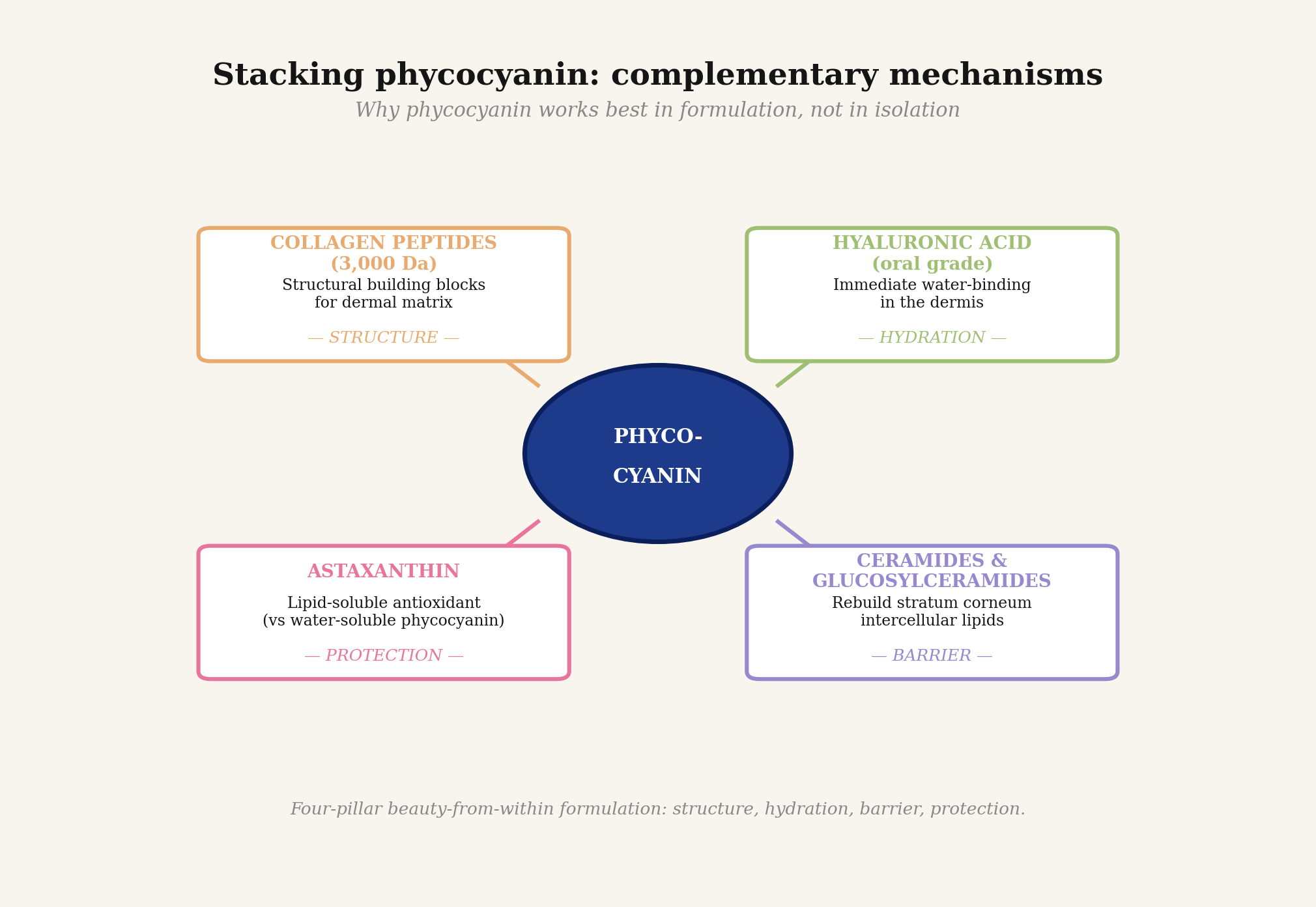
Phycocyanin plus low-molecular-weight collagen peptides. Collagen peptides at around 3,000 Da deliver structural building blocks for the dermal matrix. Phycocyanin contributes barrier function and antioxidant protection. Together they cover two of the three pillars of beauty-from-within (structure and protection), with hydration as the natural third pillar.
Phycocyanin plus hyaluronic acid (oral grade). Hyaluronic acid delivers immediate water-binding capacity in the dermis. Phycocyanin reduces transepidermal water loss, meaning the moisture that hyaluronic acid binds is retained longer. The pairing is mechanistically clean.
Phycocyanin plus ceramides or glucosylceramides. Ceramides rebuild the intercellular lipid matrix of the stratum corneum. Phycocyanin supports keratinocyte hydration. The two work in parallel on different layers of the barrier.
Phycocyanin plus astaxanthin. For consumers focused on photoaging and UV-induced oxidative stress, astaxanthin's lipid-soluble antioxidant activity complements phycocyanin's water-soluble action, expanding antioxidant coverage across cellular compartments.
For brands building a comprehensive beauty-from-within line, these combinations are more defensible than single-ingredient hero products and command higher retail prices.
How to specify without overpaying or underpaying
The decision framework reduces to four questions.
1. What is the functional claim you want to make? If it is "naturally colored with spirulina extract," a colorant grade is correct and appropriate. If it is anything about skin barrier, hydration, firmness, or antioxidant action substantiated by clinical evidence, you need functional grade.
2. In what market do you need the claim to hold up under audit? For Japan, you need a supplier with FFC compatibility documentation. For Halal-majority markets, you need the certification. For the EU, you may need a Novel Food pathway.
3. What is your cost-per-serving target, not your cost-per-kilogram? At 410 mg per day, the ingredient cost difference between colorant grade and functional grade is in the single dollars per month. For a premium product, this is usually trivial. For a mass-market product, it may or may not be.
4. Do you want a raw-material partnership or a turnkey OEM relationship? Both are valid. A turnkey OEM relationship with finished sticks or capsules from our Tomioka facility removes the formulation and packaging risk from the brand owner.
If the answer to question 1 leans functional, do not buy on E-number alone. Ask for the C-PC and APC composition. Ask for the clinical study on that material. Ask for the safety dossier. Ask for the regulatory pathway in your target markets. A supplier who has these documents will produce them in 48 hours. A supplier who does not have them will quote you 75 USD per kilogram and leave you to discover the gap when your regulatory filing is rejected.
The phycocyanin market is not one market. Specifying as if it is one market is the most common and most expensive mistake B2B buyers in this category make. Specifying with the right grade, dose, and evidence is what separates a defensible product from a copy of fifty others on the shelf.
Iizuka Shoukai is a Takasaki-based B2B exporter of premium Japanese functional ingredients, supplying supplement, food, and cosmetic manufacturers in 26+ countries. We work directly with a leading Japanese manufacturer of functional-grade phycocyanin and operate OEM finishing at our partner facility in Tomioka, Gunma.
To request the full technical dossier, certificate of analysis, clinical study summary, or OEM quotation for functional-grade phycocyanin powder, contact us at iizuka.shoukai@gmail.com or via iizukashoukai.com.