The oral beauty supplement market is growing rapidly, yet most "beauty from within" ingredients rely on indirect mechanisms - general antioxidant activity or collagen precursors. Formulators face a persistent challenge: finding an ingestible active with direct, clinically measured effects on skin barrier function, not just theoretical pathways.
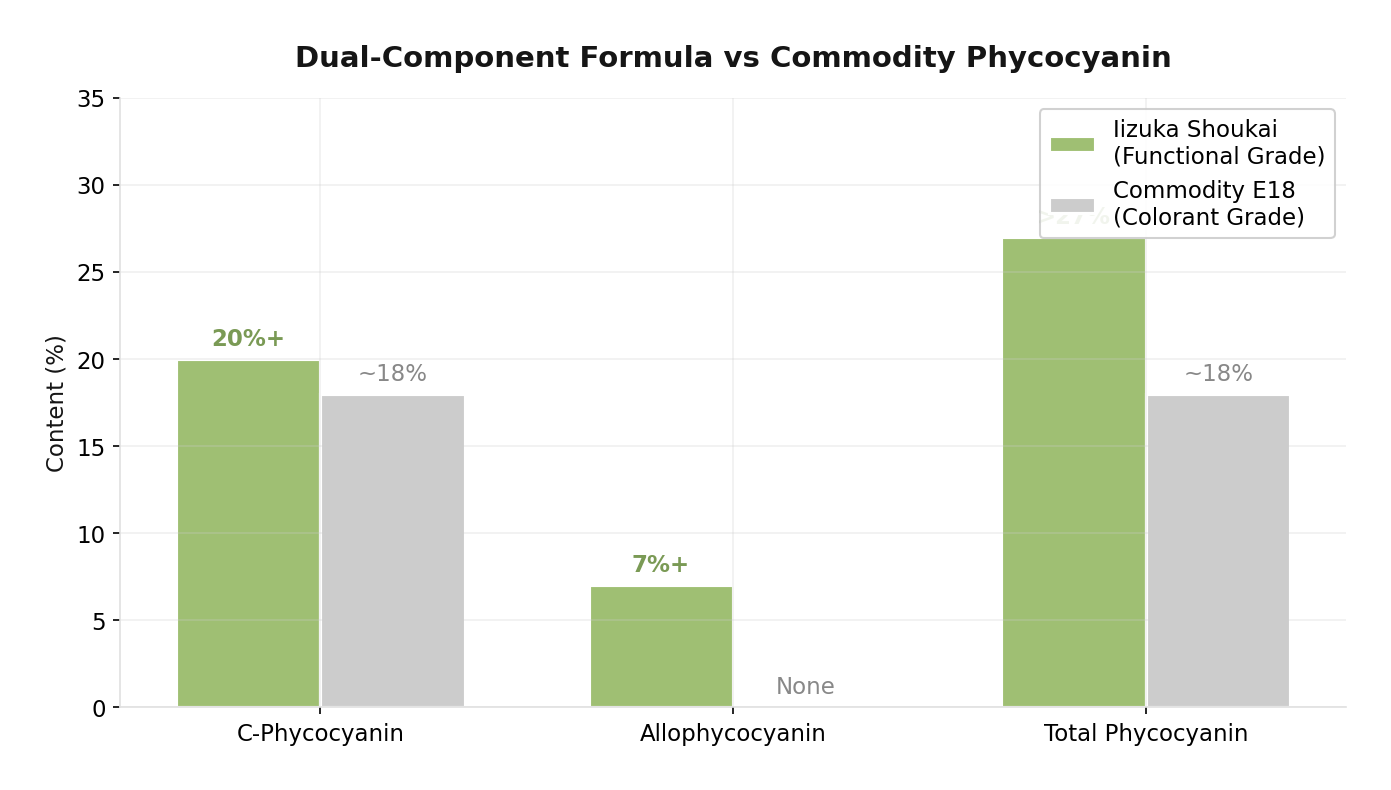
C-Phycocyanin Powder addresses this gap with a dual-component phycocyanin extract (C-phycocyanin ≥20%, allophycocyanin ≥7%) from cultivated spirulina. Unlike standard phycocyanin colorants graded by E-value (E18, E25), this is a registered functional food ingredient in Japan with a specific approved claim for skin moisture retention - making it the only phycocyanin globally that can legally support beauty-from-within positioning in the Japanese market.
The ingredient is backed by two Japanese patents: No. 4677250 (extraction method) and No. 6784947 (application in beauty food products), providing IP-protected differentiation that commodity phycocyanin cannot offer.
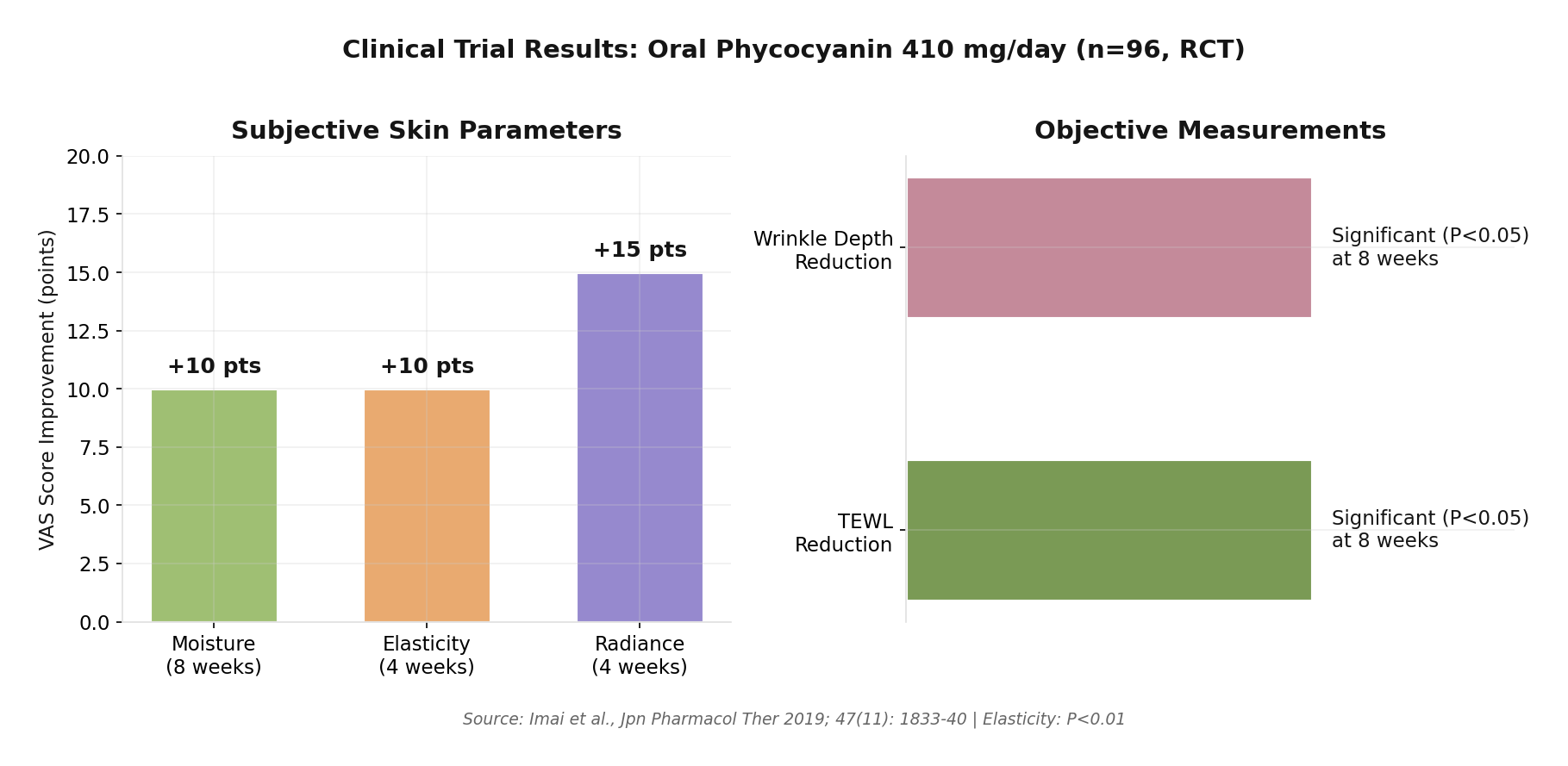
The primary functional benefit is improvement of the skin's barrier function through oral intake. A double-blind, placebo-controlled study on 96 healthy adult women (20-65 years) demonstrated statistically significant reduction in transepidermal water loss (TEWL) after 8 weeks of daily intake at 410 mg/day (C-phycocyanin 300 mg + allophycocyanin 110 mg). TEWL is the gold-standard objective measure of skin barrier integrity - lower values indicate stronger moisture retention. The study included only participants with baseline TEWL ≥10 g/m²/h, ensuring results were measured in subjects with clinically relevant skin dryness (PWrinkle Reduction and Skin Elasticity
The same clinical trial measured wrinkle depth using the replica method - a physical imprint technique that provides objective morphological data rather than subjective assessment. After 8 weeks, the phycocyanin group showed significant reduction in maximum wrinkle depth versus placebo (PAntioxidant and Anti-Inflammatory Activity
Beyond the skin-specific benefits, phycocyanin's chromophore group - phycocyanobilin, an open-chain tetrapyrrole structure - acts as a potent scavenger of reactive oxygen species. Published preclinical studies have demonstrated cholesterol metabolism improvement (Nagaoka et al., J Nutr 2005), suppression of histamine release in allergic responses (Remirez et al., Mediators Inflamm 2002), and anti-inflammatory action in colitis models through MPO activity inhibition (Gonzalez, Pharmacol Res 1999). These mechanisms expand formulation possibilities beyond beauty into cardiovascular, allergy, and gut health categories.
Spirulina contains two structural types of phycocyanin: C-phycocyanin and allophycocyanin. Most commodity suppliers offer only C-phycocyanin, as allophycocyanin requires more complex extraction and purification. This ingredient contains both in a fixed ratio (C-PC ≥20%, allo-PC ≥7%), which mirrors the composition validated in the clinical trial. This dual-component profile provides broader biological activity and ensures consistency with the evidence base.
The clinically validated dose is 410 mg/day of total phycocyanin (300 mg C-phycocyanin + 110 mg allophycocyanin). The powder format is suitable for tablets and processed food products. The recommended application format is tablets or capsules for daily oral intake. Shelf life is 3 years from date of manufacture when stored away from high temperature, humidity, and direct sunlight - no cold chain required.
Blue powder with characteristic spirulina-derived color. The composition includes trehalose and sodium citrate as stabilizing excipients, contributing to improved solubility and taste profile in finished formulations.
Phycocyanin is a pigment-protein complex found in cyanobacteria (blue-green algae), most notably spirulina (Arthrospira platensis). The name derives from Greek "phyco" (algae) and "kyanos" (blue) - it is literally the molecule responsible for the blue color in blue-green algae. Spirulina is one of Earth's oldest organisms, dating back approximately 3 billion years, and phycocyanin serves as its light-harvesting antenna pigment, channeling solar energy into the photosynthetic apparatus.
Phycocyanin exists in two structural forms: C-phycocyanin (the dominant form, found in the cytoplasm of thylakoid membranes) and allophycocyanin (found at the core of phycobilisome complexes). Both share the same chromophore - phycocyanobilin, an open-chain tetrapyrrole structurally related to biliverdin - but differ in their protein scaffold, absorption spectra, and biological activity profiles.
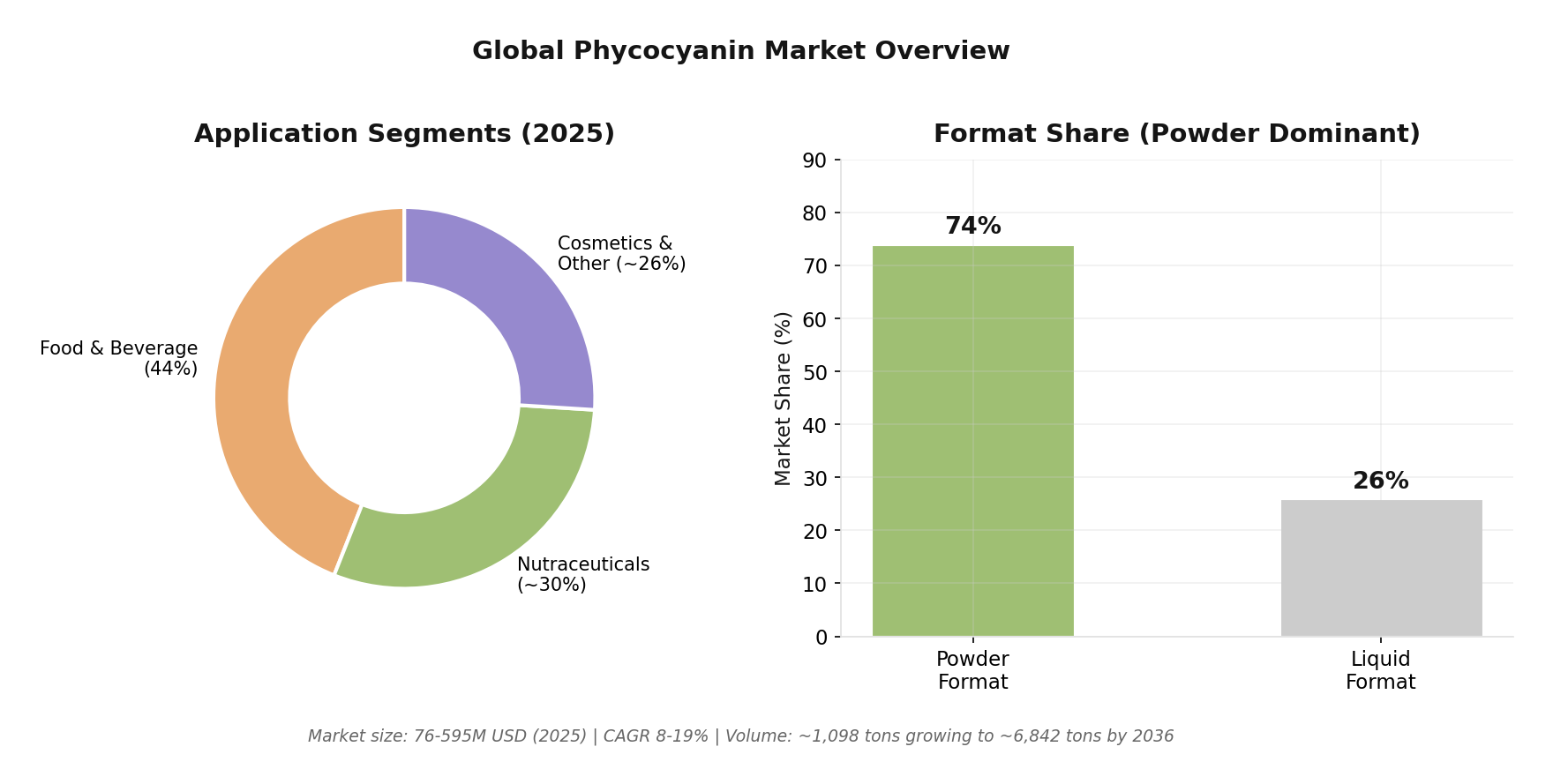
The global phycocyanin market was valued at approximately 76-595 million USD in 2025 (estimates vary by source and scope definition), with powder formats accounting for 70-77% of total demand. The nutraceutical application segment is the fastest-growing at approximately 30% of demand, driven by clean-label trends and expanding evidence for functional benefits beyond coloring.
Phycocyanin's skin benefits operate through its chromophore, phycocyanobilin, which acts as a potent inhibitor of NADPH oxidase - the primary enzymatic source of superoxide radicals in skin cells. By reducing intracellular oxidative stress, phycocyanin supports the integrity of the lipid bilayer in the stratum corneum, maintaining the barrier that prevents transepidermal water loss. The dual-component profile (C-phycocyanin + allophycocyanin) provides complementary scavenging of both intracellular and extracellular reactive oxygen species, which may explain the clinical efficacy at doses significantly lower than typical antioxidant supplements.
Additionally, phycocyanin has demonstrated suppression of NF-kB-mediated inflammatory pathways, which are implicated in accelerated skin aging and barrier dysfunction. Preclinical data shows inhibition of MPO activity (a marker of neutrophil-driven inflammation) and suppression of histamine release from mast cells, suggesting anti-inflammatory mechanisms that complement the antioxidant pathway.
The product contains C-phycocyanin at ≥20.0% and allophycocyanin at ≥7.0%, with trehalose as a stabilizing excipient and sodium citrate as a buffering agent. The total phycocyanin content exceeds 27% by weight - significantly higher than standard E18 (approximately 18% purity) or E25 (25% purity) colorant grades available from commodity suppliers. The functional distinction is critical: colorant-grade phycocyanin is standardized for absorbance value (E-value), not for biological activity or clinical efficacy, and typically contains only C-phycocyanin without the allophycocyanin fraction.
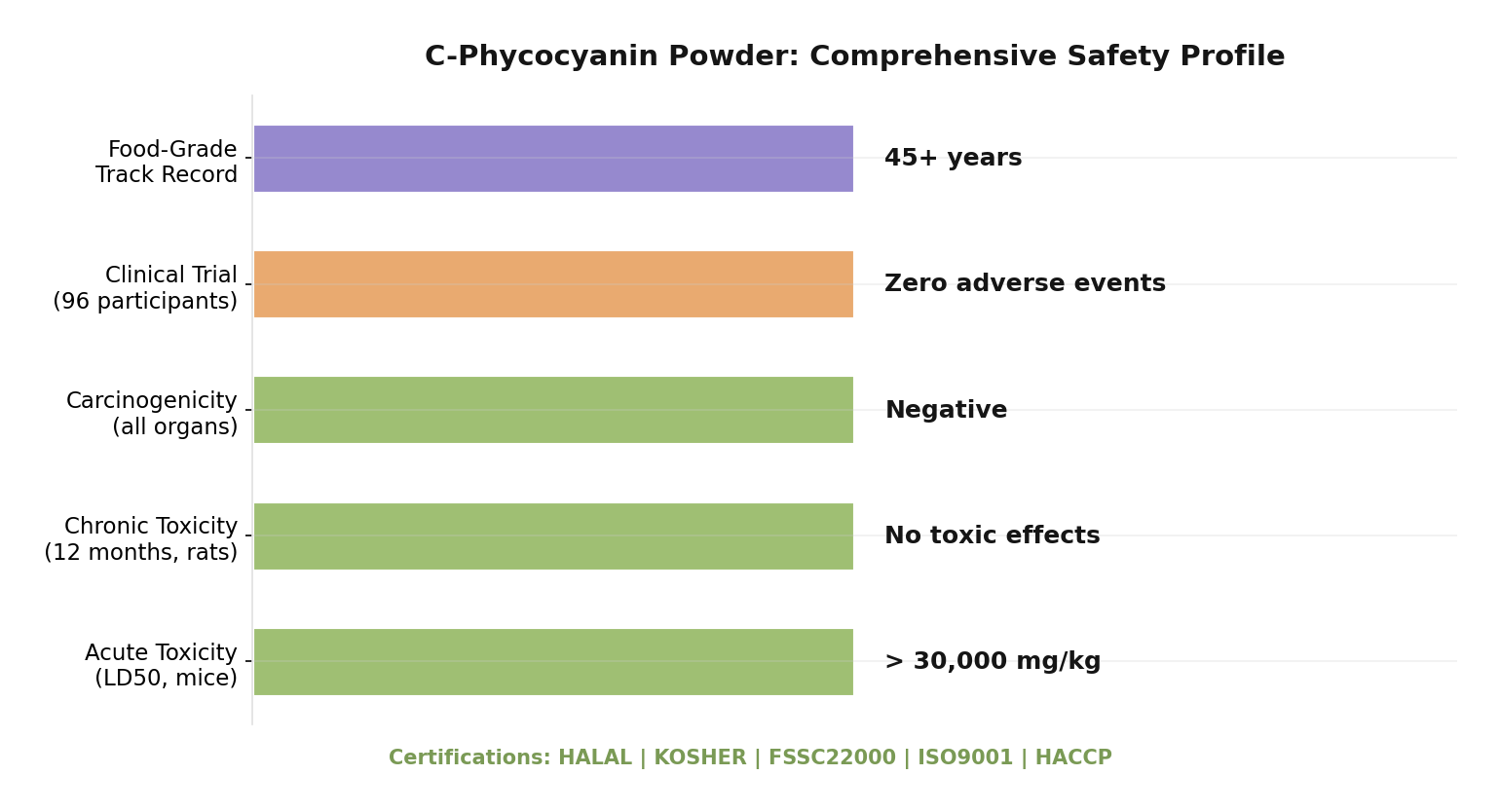
The safety profile is extensively documented. Acute toxicity testing established an LD50 exceeding 30,000 mg/kg in mice (both sexes) - indicating virtually no acute toxicity risk. A 12-month chronic toxicity study in rats (1% dietary supplementation, both sexes) found no chronic toxic effects, with carcinogenicity testing negative across all organs examined. The source material (spirulina) has undergone subacute toxicity, chronic toxicity, and next-generation testing, all confirming safety. The 96-person clinical trial reported zero adverse events in the phycocyanin group.
Quality certifications include HALAL, KOSHER, FSSC22000, ISO9001, and HACCP - a comprehensive suite that enables market access across regulatory environments including Muslim-majority markets. The manufacturer has been producing spirulina-derived pigments since 1978 - over 45 years of continuous food-grade production and safety track record.
【1】 A randomized double-blind placebo-controlled trial investigated the effects of oral phycocyanin (410 mg/day: 300 mg C-phycocyanin + 110 mg allophycocyanin) on skin parameters in 96 healthy adult women aged 20-65. After 8 weeks, the phycocyanin group showed significant improvement in skin barrier function measured by reduced transepidermal water loss (PPublication: Y. Imai, et al. Jpn Pharmacol Ther 2019; 47(11): 1833-40
【2】 An animal study demonstrated that phycocyanin significantly improved cholesterol metabolism by reducing serum cholesterol levels, suggesting hepatoprotective and cardiovascular benefits beyond skin applications.
Publication: S. Nagaoka, et al. The Journal of Nutrition 2005; 135(10): 2425-2430
【3】 Phycocyanin reduced oxidative stress by suppressing reactive oxygen species formation in hepatic tissue, demonstrating the antioxidant mechanism underlying its broader functional applications.
Publication: K. R. Roy, et al. The Japan Society of Hepatology Research 2008; 38: 511-520
【4】 An in vivo study showed phycocyanin suppressed histamine release from mast cells, indicating potential for allergy management applications.
Publication: D. Remirez, et al. Mediators Inflamm 2002; 11(2): 81-85
【5】 Phycocyanin demonstrated anti-inflammatory activity in a colitis model through suppression of myeloperoxidase (MPO) activity, a marker of neutrophil-driven tissue damage.
Publication: Ricardo Gonzalez. Pharmacological Research 1999; 39(1): 55-59
【6】 Phycocyanin inhibited calcium oxalate crystal deposition in kidneys, suggesting protective effects against uric acid stone formation.
Publication: Shukkur Muhammed Farooq, et al. Molecular and Cellular Biochemistry 2006; 284: 95-101
【7】 A cardioprotective study demonstrated that phycocyanin suppressed cardiomyocyte apoptosis during ischemic injury, reducing damage in heart failure models.
Publication: Mahmood Khan, et al. Am J Physiol Heart Circ Physiol 2006; 290(5): 2136-2145
【8】 Phycocyanin showed neuroprotective effects by suppressing receptor expression associated with nerve tissue damage, indicating potential for neurodegenerative condition support.
Publication: V. Rimbau, et al. Neurosci Lett 1999; 276(2): 75-78
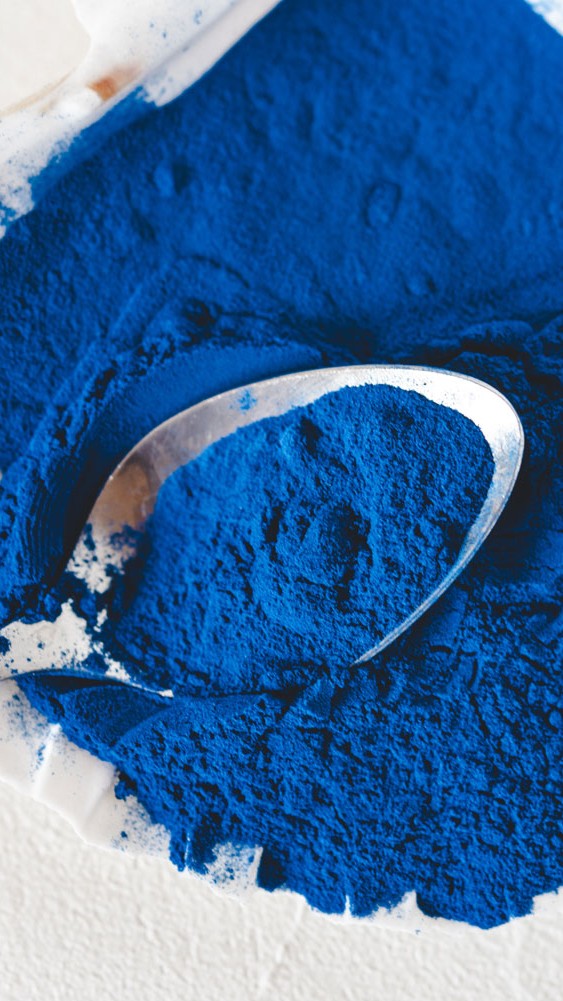
Standard E18 and E25 phycocyanin grades are food colorants standardized by absorbance value, containing only C-phycocyanin at 18-25% purity. They carry no clinical data and cannot support functional health claims. This C-Phycocyanin Powder is a registered functional food ingredient in Japan with ≥20% C-phycocyanin plus ≥7% allophycocyanin - a dual-component formula validated in a 96-person randomized controlled trial showing measurable skin barrier improvement. Two Japanese patents protect both the extraction method (No. 4677250) and the beauty food application (No. 6784947). Chinese E18 grades sell for 55-90 USD/kg because they solve a color problem. This ingredient solves a formulation problem - clinically backed oral beauty with regulatory-ready claims.
Iizuka Shoukai supplies C-Phycocyanin Powder at 550 USD/kg with a minimum order quantity of 5 kg, packaged in aluminum bags within cardboard boxes. Volume pricing is available for orders of 25 kg and above. The product ships export-ready from Japan with a 3-year shelf life from manufacture date, requiring no cold chain - standard ambient storage away from heat, humidity, and direct sunlight. All international certifications are in place: HALAL, KOSHER, FSSC22000, ISO9001, HACCP. Iizuka Shoukai also offers OEM tablet and capsule manufacturing through our Japanese partner facility with a minimum run of 5,000 units per SKU.
The clinically validated daily dose is 410 mg total phycocyanin, comprising 300 mg C-phycocyanin and 110 mg allophycocyanin. The powder format is designed for tablets and processed food products - these are the recommended delivery formats for oral beauty supplements. At 410 mg/day, a 30-day supply requires approximately 12.3 g of powder per finished unit. The product includes trehalose and sodium citrate as stabilizing excipients, which support solubility and taste in finished formulations. Storage is straightforward: ambient conditions, avoid high temperature and humidity, protect from direct sunlight. Shelf life is 3 years unopened. Note regulatory restrictions in Japan: the product cannot be used in certain food categories including nori, wakame, tofu, and konnyaku products.
Three fundamental differences separate this product from commodity alternatives. First, regulatory status: this is the only phycocyanin registered as a functional food ingredient in Japan with an approved skin barrier claim - Chinese and Indian suppliers offer colorant-grade material with no functional registration. Second, composition: the dual-component formula contains both C-phycocyanin (≥20%) and allophycocyanin (≥7%), while competitors typically provide C-phycocyanin only. Third, evidence: a 96-participant double-blind RCT demonstrated measurable TEWL reduction, wrinkle depth decrease, and elasticity improvement at 410 mg/day. Iizuka Shoukai provides this ingredient with full documentation, HALAL and KOSHER certification, and 45+ years of manufacturing heritage from the world's pioneer in managed spirulina cultivation.


