
By Anna Iizuka | Reading time: ~20 minutes
Ashitaba: Japan’s Longevity Secret for Supplement Formulators
In Izu Oshima, a volcanic island south of Tokyo, grows a plant the locals call “ashitaba” — literally, “tomorrow’s leaf.” Eat one leaf today, and tomorrow two more grow in its place. The name is folklore, but the regenerative principle at its core isn’t.
For supplement formulators and R&D professionals seeking competitive advantage in the crowded longevity category, ashitaba (Angelica keiskei) represents something increasingly rare: a functional ingredient backed by legitimate mechanistic science, distinct from the resveratrol and NMN saturation dominating the market today. This article explains what ashitaba is, why its primary bioactive — 4,4-dimethoxychalcone (DMC) — works differently than other longevity compounds, and how to evaluate, source, and formulate with it responsibly.
What Is Ashitaba?
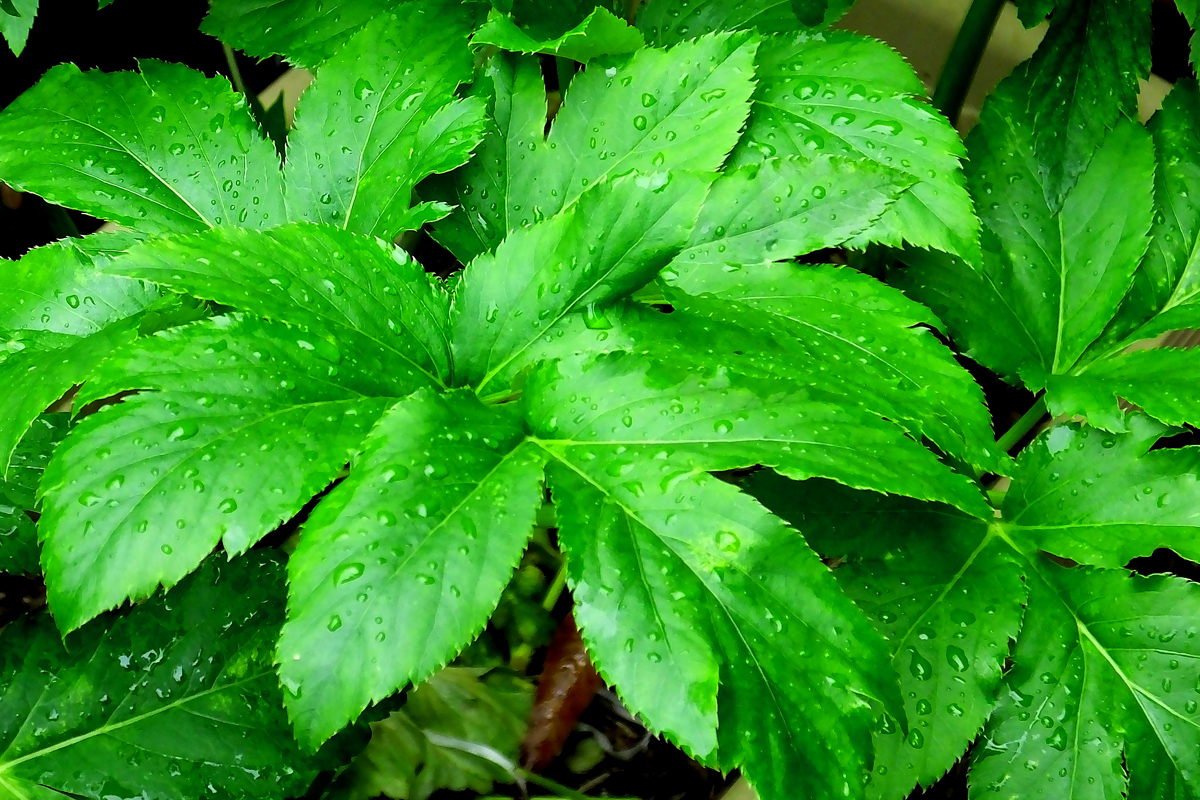
Ashitaba is a perennial herb endemic to Japan’s Izu Islands, reaching about one meter in height with distinctive compound leaves and small yellow flowers that appear in late summer. Botanically Angelica keiskei, it belongs to the Apiaceae family alongside celery, parsnip, and dong quai. For at least 500 years, Izu islanders have consumed ashitaba as food medicine — fresh leaves in soups, dried powder in tea, occasionally fermented. Traditional medicine claims include improved digestion, reduced inflammation, and enhanced longevity.
The plant thrives in volcanic soil, which influences its mineral profile. In commercial cultivation (primarily Japan and small operations in Australia and Taiwan), ashitaba is typically harvested at 3–4 months of age, when leaf density and active compound concentration reach optimal levels. Leaves are dried at carefully controlled temperatures to preserve polyphenolic integrity, then milled to powder for supplement and functional food applications.
From a formulation perspective, ashitaba exists in three primary forms: whole plant powder (green, earthy flavor), hot-water extract (standardized to 0.05–0.25% 4,4-dimethoxychalcone by HPLC), and isolated active compound preparations. The powder is the most commonly available and cost-effective for B2B applications. A well-specified ashitaba powder should declare minimum 0.10% DMC content by third-party HPLC analysis.
Chalcones and DMC: The Mechanistic Core
Ashitaba’s bioactive profile centers on chalcones, a class of polyphenolic compounds characterized by a 15-carbon backbone with two aromatic rings connected by a three-carbon chain. Within ashitaba, the principal chalcones are xanthoangelol, 4-hydroxyderricin, and 4,4-dimethoxychalcone (DMC), with DMC comprising roughly 50–70% of the total chalcone content in high-quality material.
Why DMC specifically? Because unlike general “polyphenol” marketing — which describes thousands of compounds with overlapping and sometimes contradictory mechanisms — DMC has demonstrated a discrete, replicable biochemical action: activation of autophagy (cellular self-cleaning) through a specific molecular pathway involving GATA transcription factors. This distinction matters when positioning ashitaba against competitors.
DMC concentration in ashitaba powder typically ranges 0.05–0.15% by weight, with premium material reaching 0.25%. This is why specification matters. A supplier claiming “ashitaba extract” without declaring DMC concentration is selling you dried leaves, not a functional ingredient. Reputable suppliers provide Certificates of Analysis (CoAs) showing HPLC-verified DMC levels, batch-to-batch consistency, and absence of heavy metals and microbial contaminants.
The chalcone structure itself is relatively thermally stable, but chalcones are sensitive to light and oxidation. This has direct implications for formulation: ashitaba preparations require moisture-controlled storage, opaque packaging, and relatively short shelf-life targets (12–24 months from manufacture) compared to synthetic vitamin ingredients.
The Science: Autophagy Activation and Longevity
The mechanistic case for ashitaba rests primarily on a 2019 Nature Communications study led by researchers at the University of Graz (Austria), with collaborators from INSERM/Gustave Roussy (Paris) and Rutgers University (New Jersey). The study demonstrated that DMC activates autophagy through a pathway that is independent of the TORC1/mTOR signaling cascade and instead depends on specific GATA transcription factors.
Here’s the pathway in formulators’ terms: TORC1 (Target of Rapamycin Complex 1) is a nutrient-sensing kinase that, when active, suppresses autophagy. Most known autophagy inducers — including rapamycin — work by inhibiting TORC1. DMC takes a fundamentally different route. Instead of targeting TORC1, DMC works through GATA transcription factors (specifically Gln3 in yeast), triggering autophagy through a TORC1-independent mechanism. This is a critical differentiator: DMC activates cellular self-cleaning through a pathway that other longevity compounds do not use.
In C. elegans (the standard longevity model organism), DMC supplementation extended median lifespan by approximately 20% under normal conditions. In yeast and fruit flies, similar lifespan extensions were observed. In genetic backgrounds already optimized for longevity, the effect was smaller, suggesting DMC works through conserved aging pathways rather than additive mechanisms. Importantly, when autophagy genes were knocked out, DMC’s lifespan-extending effects were abolished — confirming that autophagy is the causal mechanism.
This is mechanistically distinct from resveratrol (which activates sirtuins, a different aging-suppression pathway) and from NMN (which restores NAD pools for energy metabolism). Ashitaba doesn’t compete with these compounds — it is orthogonal to them at the biochemical level, which matters for formulation strategy. And critically, DMC’s TORC1-independent mechanism means it can potentially complement rapamycin-based approaches as well, rather than duplicating them.
The limitations deserve equal weight: the Nature Communications study, while rigorous, was conducted in model organisms (C. elegans, yeast, Drosophila) and mice (cardioprotection model). No human clinical longevity trials exist for ashitaba or DMC. There is one small human trial (2017, n=20) showing acute improvement in postprandial glucose response with ashitaba leaf powder, but this is a metabolic marker, not lifespan extension. As a formulator, you cannot claim longevity benefits in a supplement; you can note “supports cellular autophagy” if your DMC content meets the typical effective dose range (see Formulation section).
Market Context: The Longevity Supplement Landscape
The global longevity supplement market is estimated at USD 4.5–7.4 billion in 2024 (depending on category definitions) and is forecast at 10–19 billion by 2030–2033, driven by NAD-restoration compounds (NMN, NR), sirtuin activators (resveratrol, quercetin derivatives), mTOR inhibitors (rapamycin analogs, metformin), and emerging mechanisms including senolytics and autophagy enhancers.
Within this landscape, ashitaba occupies an interesting niche: it has legitimate mechanism, multi-century traditional use, and genuine botanical supply chain, but near-zero market penetration outside Japan. In the U.S., ashitaba appears in fewer than 50 finished supplements (typically positioned as a “longevity botanical complex” ingredient rather than featured). In Europe and UAE markets, it is virtually unknown, creating first-mover advantage for formulators who can educate their R&D and marketing teams around the mechanism.
Current pricing for high-quality ashitaba powder (0.10% minimum DMC, third-party tested, JAS organic certified) ranges USD 12–35 per kilogram, depending on lot size, origin certification, and extraction/processing complexity. This positions it favorably against NMN (USD 200–500/kg wholesale) and comparably to resveratrol extracts (USD 15–40/kg). For a 500 mg daily dose, ingredient cost lands approximately USD 0.04–0.15 per dose, enabling healthy margins in consumer pricing.
Geographic adoption patterns show strong penetration in Japan (ashitaba featured in 300+ retail supplements), moderate adoption in South Korea and Taiwan, emerging interest in Australia and New Zealand, and nascent awareness in the United States. The European market remains largely untapped.
Application in Supplement Formulation
For R&D, the practical question is straightforward: what dose works, and what formulation considerations matter?
Dosage: Effective dosage is anchored to DMC content. The Nature Communications research used DMC doses equivalent to approximately 12–50 mg/kg body weight in C. elegans. Translating to human supplements (assuming 70 kg adult, conservative 2.5x safety factor), effective DMC delivery is approximately 10–15 mg daily. This translates to a delivered dose of 350–1,400 mg of ashitaba powder daily, depending on DMC concentration.
In practice, most finished supplements deliver 500 mg of ashitaba powder (approximately 0.5–0.75 mg DMC per serving), positioning it as part of a multi-ingredient longevity stack rather than a standalone. Some advanced formulations deliver 1,000–1,400 mg daily in divided doses (500 mg morning and evening).
Bioavailability: Chalcones are lipophilic compounds with modest oral absorption (estimated 10–30% in humans based on pharmacokinetic literature). This suggests formulations including a lipophilic carrier or taken with fat-containing meals may improve bioavailability, though human data is limited. Some suppliers combine ashitaba with fat-soluble polyphenol carriers (resveratrol, EGCG preparations) to enhance absorption — this approach is defensible mechanistically.
Synergistic combinations: Ashitaba (autophagy activation via GATA transcription factors) combines mechanistically well with NMN (NAD restoration), fisetin (senolytic), and urolithin A (mitophagy enhancer). These represent different aging pathways, with potential for compound effect. Because DMC works independently of the mTOR/TORC1 pathway, it can also complement rapamycin-based approaches without mechanistic redundancy. However, beware ingredient lists with 20+ longevity compounds — efficacy becomes impossible to verify and costs spiral.
Stability: Ashitaba powder is hygroscopic; finished products require moisture barriers and storage conditions below 25°C. In capsule form, ashitaba powder is stable 12–18 months under standard storage. In tablet form with moisture-tolerant binding agents, stability extends toward 24 months. In soft-gel or liquid formulations, ashitaba extract (not powder) is more stable, though cost increases.
Specification requirements: Any ashitaba ingredient should declare minimum 0.10% DMC by HPLC (third-party verified), heavy metal testing (lead, cadmium, arsenic below USP limits), microbial plate counts, and batch traceability. Demand CoAs showing lot-specific HPLC data, not generic ingredient specs.
Competitive Positioning: Ashitaba vs. Resveratrol vs. NMN
Primary Mechanism: Ashitaba — Autophagy via GATA transcription factors (TORC1-independent) | Resveratrol — Sirtuin (NAD-dependent deacetylase) activation | NMN — NAD pool restoration
Human Clinical Evidence: Ashitaba — Postprandial glucose (1 trial, n=20); no longevity trials | Resveratrol — Metabolic markers, minimal cardiovascular data | NMN — Muscle NAD restoration (3 trials); metabolic improvements
Lifespan Extension (Animal Models): Ashitaba — ~20% in C. elegans; extends lifespan in yeast and flies | Resveratrol — 14–20% in rodents | NMN — 10–15% in mice (context-dependent)
Bioavailability Challenges: Ashitaba — Low chalcone absorption (~15–20%), lipophilic | Resveratrol — Poor oral absorption (~20%), requires micronization or metabolite conversion | NMN — Active as precursor; absorbed 25–30%, converted to NAD with variable efficiency
Market Maturity: Ashitaba — Nascent; <1% penetration in U.S., strong in Japan | Resveratrol — Mature; 25+ years research, ubiquitous in supplements | NMN — Rapidly scaling; marketed as “NAD booster,” <5 years commercial
Typical Daily Dose: Ashitaba — 500–1,400 mg powder (~5–10 mg DMC) | Resveratrol — 150–500 mg standardized extract | NMN — 500–1,000 mg (high-dose products to 2,000 mg)
Cost per Serving: Ashitaba — USD 0.04–0.15 | Resveratrol — USD 0.10–0.40 | NMN — USD 1.00–3.00
Mechanistic Orthogonality: Ashitaba — Distinct GATA/autophagy pathway; combines well with NMN, rapamycin, and senolytics | Resveratrol — Distinct sirtuin pathway; complements NAD restoration | NMN — Distinct metabolic pathway; complements autophagy activators
The positioning takeaway: Ashitaba is not “Japanese resveratrol.” It is a distinct longevity mechanism — autophagy activation through GATA transcription factors, independently of the mTOR/TORC1 pathway — with legitimate science, low market saturation, and straightforward sourcing from Japan. It occupies the sweet spot of “serious mechanism + unfilled market + favorable economics.”
For R&D teams, the decision tree is simple: If you are building a multi-pathway longevity stack (autophagy + NAD restoration + sirtuin activation + senolytic targeting), ashitaba is a logical and defensible third component after NMN and resveratrol. If you’re building a single-ingredient hero product, the human clinical data gap makes ashitaba a risky primary claim — reposition as NMN or resveratrol.
How to Source Responsibly
Ashitaba sourcing quality hinges on three verification steps: supplier credibility, specification compliance, and batch-to-batch consistency.
Supplier Vetting: Require suppliers to provide (1) JAS (Japan Agricultural Standard) organic certification or equivalent, (2) facility audits (ISO 22000 food safety standard minimum), (3) traceability to cultivation location (Izu Islands origin preferred, but not mandatory), and (4) list of end-client references. Reputable Japanese suppliers — there are approximately 15–20 globally — maintain this documentation as standard practice. Avoid suppliers offering only “certified organic” without origin documentation or third-party audit trails.
Specification Compliance: Non-negotiable minimums are (1) HPLC-verified DMC content (0.10% minimum), (2) Certificate of Analysis showing lot-specific test results (not generic ingredient sheets), (3) heavy metals testing (lead <0.5 ppm, cadmium <0.2 ppm, arsenic <0.3 ppm per USP <232>/<233>), and (4) microbial testing (E. coli, Salmonella absence; total plate count <100,000 CFU/g).
Batch Consistency: Ashitaba DMC content varies naturally by harvest season and location (Izu Islands material ranges 0.08–0.20%, Taiwan material typically 0.05–0.12%). Acceptable batch-to-batch variation is 10–15% around the declared minimum. If a supplier delivers multiple lots with DMC swinging 0.08% one month and 0.18% the next, their quality control is inadequate — find another partner.
Sustainability Considerations: Ashitaba grows wild in volcanic soils; commercial cultivation has minimal environmental footprint. Cultivated material is preferable to wild-harvested (which carries sustainability questions) and is now commodity supply. Verify suppliers are using cultivated sources, not wild-harvesting.
Storage: Store ashitaba powder in cool, dry conditions (below 20°C, <60% RH) in opaque, moisture-proof packaging. Shelf-life target is 18 months from manufacture under these conditions. Beyond 24 months, assume DMC degradation of 10–20% annually.
Next Steps for Your R&D
If ashitaba aligns with your product strategy, follow this six-step pathway:
1. Specification Development (2–4 weeks): Lock down your ashitaba powder specification — minimum DMC content (recommend 0.12%), source origin, certification requirements, and testing protocols. Work with your supplier to confirm they can consistently meet spec; request CoAs for 3 consecutive lots as proof.
2. Stability Testing (3 months): Run accelerated stability on your finished product (ashitaba in your capsule/tablet/liquid vehicle) at 40°C / 75% RH for 3 months, testing for DMC degradation, water activity, microbial growth, and color/odor changes. This defines your shelf-life claim.
3. Combination Optimization (2–4 weeks): If formulating ashitaba in a multi-ingredient stack (e.g., with NMN, resveratrol, fisetin), verify no interactions during stability testing and confirm label claims are supportable with ingredient mechanisms (not individual longevity claims, but “supports cellular autophagy and NAD metabolism” if dosed appropriately).
4. Consumer Education Strategy (4–6 weeks): Develop marketing language around “autophagy-supporting chalcones” and “traditional Japanese longevity botanical” rather than direct longevity claims. This positions ashitaba distinctly vs. NMN/resveratrol and educates consumers on mechanism.
5. Regulatory Intelligence (2 weeks): Confirm structure/function claim language is compliant in your target market. U.S. claims like “supports cellular autophagy” are generally acceptable under DSHEA; “supports healthy aging” is reasonable. Avoid “extends lifespan” and “anti-aging” language. Verify with regulatory counsel if selling in EU, UAE, or other regulated markets.
6. Optional: Long-Term Clinical Validation (12+ months, significant investment): If resources permit, sponsor a human trial — even a small one (n=30–40) measuring autophagy markers (LC3-II/LC3-I ratio in peripheral blood, urinary autophagy biomarkers) or metabolic parameters. This would position your brand as research-backed and justify premium pricing vs. competitors.
Conclusion
Ashitaba represents a rare opportunity for supplement formulators: a legitimately distinct longevity mechanism backed by solid mechanistic science, grounded in century-long traditional use, yet virtually untapped in Western markets. Its primary bioactive, DMC, activates autophagy through GATA transcription factors — a molecular pathway independent of mTOR/TORC1 and orthogonal to NAD restoration and sirtuin activation. This means it plays well with NMN, resveratrol, and even rapamycin-based approaches, not against them.
The sourcing is straightforward from established Japanese suppliers, the bioavailability and stability are manageable engineering challenges, and the positioning is defensible without exaggerated claims.
For R&D professionals building multi-pathway longevity formulations, ashitaba is a logical and under-leveraged third component. Start with specification development and small-scale stability testing; if the numbers work, formulation integration is straightforward.
The window for first-mover advantage in North American and European markets is open. Japanese suppliers have supply capacity. Consumer interest in longevity is accelerating. The gap is innovation and education — and that’s where your R&D team adds value.
Source Ashitaba from Japan
Iizuka Shoukai supplies both Ashitaba Chalcones Powder (concentrated, standardized for chalcone content) and Ashitaba Powder Organic (JAS-certified whole leaf) directly from Japanese manufacturers. We provide samples, full technical documentation including HPLC-verified CoAs, and formulation support.
Contact: iizuka.shoukai@gmail.com | iizukashoukai.com
References
1. Carmona-Gutierrez D, et al. The flavonoid 4,4′-dimethoxychalcone promotes autophagy-dependent longevity across species. Nature Communications. 2019;10:651. (University of Graz, Austria; INSERM, Paris; Rutgers University, NJ)
2. Zimmermann A, et al. 4,4′Dimethoxychalcone: a natural flavonoid that promotes health through autophagy-dependent and -independent effects. Autophagy. 2019;15(9):1662-1664.
3. Maronpot RR. Toxicological assessment of Ashitaba Chalcone. Food and Chemical Toxicology. 2015;77:111-119.
4. Ohkura N, et al. Effect of Ashitaba (Angelica keiskei) on postprandial hyperglycemia: a human study. 2017.
5. Grand View Research. Anti-Aging Supplements Market Size & Trends, 2024. Precedence Research. Anti-Aging Supplements Market Report, 2025.
Disclaimer: This article is intended for B2B audiences (formulators, brand owners, R&D professionals). No human longevity trials exist for ashitaba or DMC. Structure/function claims must be verified with regulatory counsel for your target market. The information is for educational and commercial evaluation purposes.