A powdered extract of centifolia rose (Rosa centifolia) petals, specified at 70% or more total polyphenols, with eugeniin among the identified polyphenols. The producer recommends 100 mg per day, so one 1 kg bag covers about 10,000 daily servings. Declared as rose petal extract, with a shelf life of 4 years from production.
Tell us what you are developing and which documents you need. We reply from Japan within one working day with the product specification, SDS and the CoA of the current lot.
The extract is made from the petals of the centifolia rose. The petals are extracted, the extract is concentrated to the specified polyphenol content, and the result is supplied as a powder. The extraction solvent, drying method and particle size are not given in the documents we hold; they are confirmed with the producer specification in your quotation.
Step 1 · Rosa centifolia
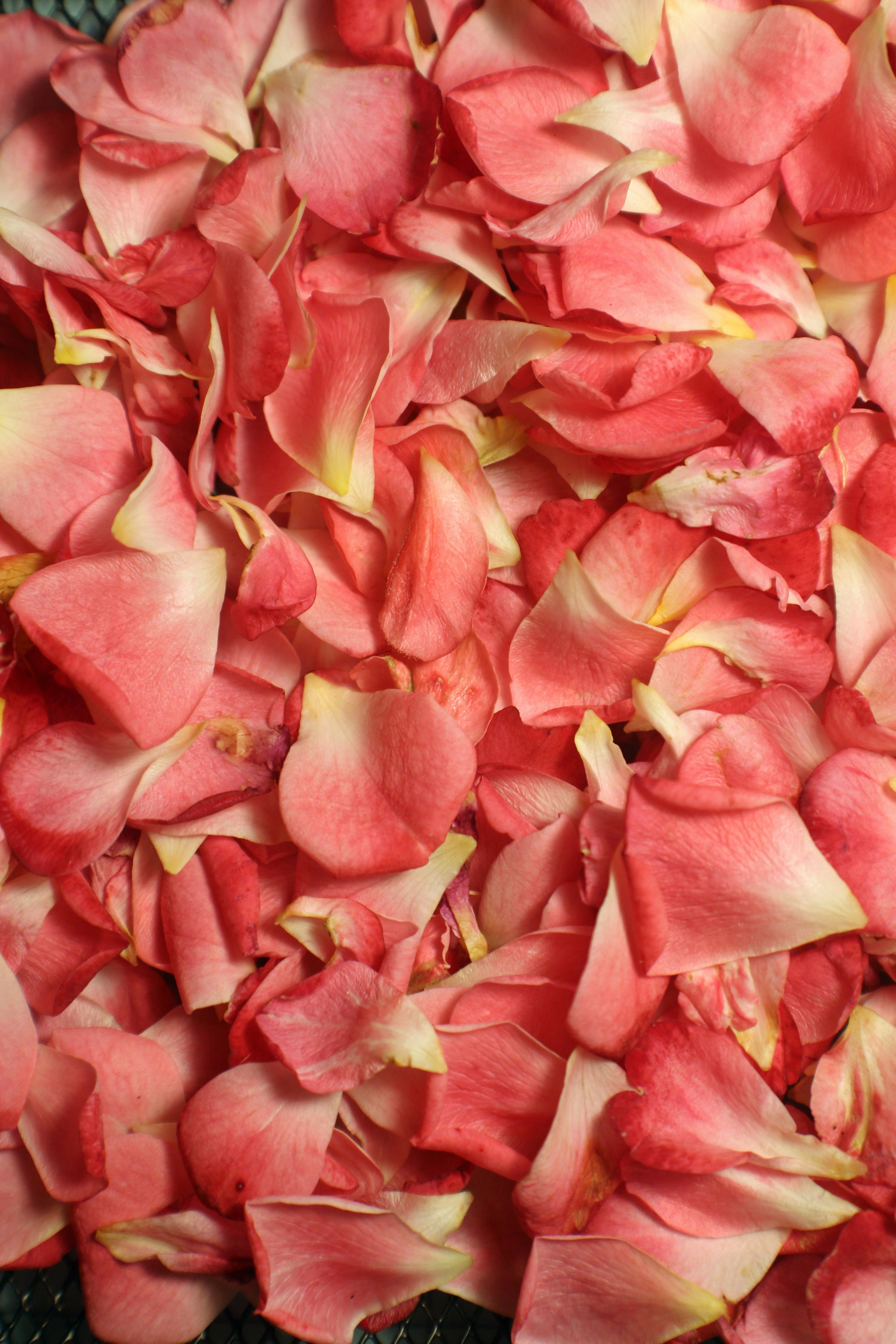
Petals of the centifolia rose
Step 2 · petals
Polyphenols are extracted from the petals
Step 3 · min. 70% polyphenols
The extract is concentrated to the specified polyphenol content
Step 4 · moisture max. 8.5%
Red-purple to red-brown powder
Step 5 · 9 test items
Polyphenols, moisture, heavy metals, arsenic, microbiology, appearance, taste and aroma
Step 6 · 1 kg aluminium bag
Shelf life 4 years from production
The grade on this page. Other grades, where available, are specified on request.
Example lot values are published in the developer's guide below. They are an example, not a specification; your lot's CoA governs.
A Japanese trading company selling directly to brand owners and contract manufacturers. No distributor layer between you and the documents.
Every shipment travels with the Certificate of Analysis of its own lot, with the measured values and the full safety panel.
A small first order lets you run a pilot batch before committing to bulk. Larger volumes are quoted by volume and delivery terms.
For registered companies developing a product. Tell us the format you plan and we will say honestly what to expect.
After payment is received. Freight quoted on request. Specification and SDS before you order, CoA with the goods.
If you are comparing ingredients for a new SKU, these questions separate one material from another quickly.
This grade is specified at 70% or more total polyphenols by the Folin-Ciocalteu method, as gallic acid. If your dossier needs a marker compound or an HPLC profile, tell us before you order: the 70% grade carries no separate eugeniin limit.
Rules differ by market and product category. The status check for supplement or food use sits with the brand owner or importer; we supply the producer documents it needs.
Neither is on file for this product. In the UAE, supplements need a halal certificate; ask us and we will check with the producer what can be issued for your order.
The producer recommends 100 mg per day, so 1 kg is about 10,000 daily servings. Fix your serving size first, then size the pilot order.
The producer confirmed use in acidic jelly sticks with a heating step. For other processes, test the sample in your actual base, and check the colour: the powder is red-purple to red-brown.
We make no effect claims for this ingredient. Statements about a finished product follow the rules of the destination market and are the brand owner's responsibility. Ask us which producer data your dossier needs.
What each component is, what the processing changes, and what published research on the raw material has examined. No health claims; references on request.
Rose Petal Polyphenol Extract Powder 70% is a concentrated extract of centifolia rose (Rosa centifolia) petals, specified at 70% or more total polyphenols. The producer's recommended intake is 100 mg per day, so one 1 kg bag covers about 10,000 daily servings and the extract takes little room in a capsule, a softgel or a stick. On the label it is declared simply as rose petal extract.
In a beauty-from-within line, the extract can sit next to a protein base such as Fish Collagen Tripeptide or Fish Elastin Peptide, next to Glutathione Yeast Extract Powder 20%, or next to another rose ingredient, Rose Placenta Extract Powder.
This page describes the 70% grade. The producer also makes an 8% polyphenol grade on dextrin, specified at 40 mg or more eugeniin per 100 g, with a 3-year shelf life. The producer positions it for functional foods at 500 to 1,000 mg per day and for drinks and confectionery at 50 to 100 mg per day. Ask if your format needs it.
The powder comes in 1 kg aluminium bags; the minimum order is one bag. Registered companies developing a product receive a free 20 g sample, and the producer specification is available on request; SDS and lot Certificate of Analysis are confirmed with your quotation. For orders of 20 kg or more, tell us the volume and timing at the planning stage. Our own OEM line at Tomioka Plant makes finished capsules, tablets and stick packs from 5,000 units per SKU.
We will help you choose the form and packaging for your brand.
Rose petals carry several classes of polyphenols. In Damask rose petals, the flavonols found were glycosides of kaempferol and quercetin, with kaempferol 3-O-glucoside the main component [1]. The colour comes from anthocyanins: cyanidin 3,5-diglucoside and peonidin 3-glucoside were identified in petals of Rosa centifolia cultivars [2]. Ellagitannins, a class of hydrolysable tannins, have been isolated from Rosa centifolia petals, among them rugosin B and rugosin D [3].
Eugeniin, also called tellimagrandin II, is an ellagitannin built on a glucose core that carries groups derived from gallic acid [4]. The producer has identified eugeniin among the polyphenols of this extract. The 70% grade is specified by total polyphenols and sets no separate eugeniin limit; the producer's 8% grade on dextrin is specified at 40 mg or more eugeniin per 100 g.
Total polyphenols on this specification are measured by the Folin-Ciocalteu method against a gallic acid standard. The reagent reacts with reducing substances, not only with phenols: a study of more than 80 compounds found that phenols, proteins and thiols all react, as do several vitamin derivatives and some inorganic ions, and concluded that the assay gives a rough approximation of total phenolic content in most plant materials [5]. In practice this means two things. Polyphenol figures from different suppliers are comparable only when the method and the reference standard match. And if your dossier needs specific compounds, ask for an HPLC profile in addition to the total figure.
Independent laboratories have tested rose petal extracts against enzymes studied in skin research, such as tyrosinase, elastase and matrix metalloproteinase-1 (MMP-1); one study compared three extraction methods for white rose petals [6]. A study of Rosa gallica petal extract combined cell experiments on melanin and MMP-1 with a trial in which volunteers applied a formulation containing the extract and facial skin brightness (L* value) was measured [7]. These studies used other rose species and other extracts, not this ingredient, and no effect is claimed for it here.
The producer's technical documents for this ingredient describe enzyme and cell assays and small human studies that measured skin parameters such as hydration and elasticity. They are producer data, not claims for a finished product. Ask us which topics your dossier needs.
The extract is the producer's food-use grade. Whether a concentrated rose petal extract may be used in a supplement or a food is checked by the brand owner or importer in each market, and statements about the effect of a finished product follow the rules of the destination market. In the UAE, supplements need a halal certificate; halal documentation for this ingredient is not on file and is checked per order.
Sources
Product facts: the producer specification for this grade, the producer's product documents and producer correspondence. Summaries are provided to registered companies on request.
Start at the minimum order. Free sample. Specification, SDS and lot CoA on request.
Request a sample or quotationRose Petal Polyphenol Extract Powder 70% is a concentrated extract of centifolia rose (Rosa centifolia) petals, specified at 70% or more total polyphenols. The producer's recommended intake is 100 mg per day, so one 1 kg bag covers about 10,000 daily servings and the extract takes little room in a capsule, a softgel or a stick. On the label it is declared simply as rose petal extract.
In a beauty-from-within line, the extract can sit next to a protein base such as Fish Collagen Tripeptide or Fish Elastin Peptide, next to Glutathione Yeast Extract Powder 20%, or next to another rose ingredient, Rose Placenta Extract Powder.
This page describes the 70% grade. The producer also makes an 8% polyphenol grade on dextrin, specified at 40 mg or more eugeniin per 100 g, with a 3-year shelf life. The producer positions it for functional foods at 500 to 1,000 mg per day and for drinks and confectionery at 50 to 100 mg per day. Ask if your format needs it.
The powder comes in 1 kg aluminium bags; the minimum order is one bag. Registered companies developing a product receive a free 20 g sample, and the producer specification is available on request; SDS and lot Certificate of Analysis are confirmed with your quotation. For orders of 20 kg or more, tell us the volume and timing at the planning stage. Our own OEM line at Tomioka Plant makes finished capsules, tablets and stick packs from 5,000 units per SKU.
We will help you choose the form and packaging for your brand.
Rose petals carry several classes of polyphenols. In Damask rose petals, the flavonols found were glycosides of kaempferol and quercetin, with kaempferol 3-O-glucoside the main component [1]. The colour comes from anthocyanins: cyanidin 3,5-diglucoside and peonidin 3-glucoside were identified in petals of Rosa centifolia cultivars [2]. Ellagitannins, a class of hydrolysable tannins, have been isolated from Rosa centifolia petals, among them rugosin B and rugosin D [3].
Eugeniin, also called tellimagrandin II, is an ellagitannin built on a glucose core that carries groups derived from gallic acid [4]. The producer has identified eugeniin among the polyphenols of this extract. The 70% grade is specified by total polyphenols and sets no separate eugeniin limit; the producer's 8% grade on dextrin is specified at 40 mg or more eugeniin per 100 g.
Total polyphenols on this specification are measured by the Folin-Ciocalteu method against a gallic acid standard. The reagent reacts with reducing substances, not only with phenols: a study of more than 80 compounds found that phenols, proteins and thiols all react, as do several vitamin derivatives and some inorganic ions, and concluded that the assay gives a rough approximation of total phenolic content in most plant materials [5]. In practice this means two things. Polyphenol figures from different suppliers are comparable only when the method and the reference standard match. And if your dossier needs specific compounds, ask for an HPLC profile in addition to the total figure.
Independent laboratories have tested rose petal extracts against enzymes studied in skin research, such as tyrosinase, elastase and matrix metalloproteinase-1 (MMP-1); one study compared three extraction methods for white rose petals [6]. A study of Rosa gallica petal extract combined cell experiments on melanin and MMP-1 with a trial in which volunteers applied a formulation containing the extract and facial skin brightness (L* value) was measured [7]. These studies used other rose species and other extracts, not this ingredient, and no effect is claimed for it here.
The producer's technical documents for this ingredient describe enzyme and cell assays and small human studies that measured skin parameters such as hydration and elasticity. They are producer data, not claims for a finished product. Ask us which topics your dossier needs.
The extract is the producer's food-use grade. Whether a concentrated rose petal extract may be used in a supplement or a food is checked by the brand owner or importer in each market, and statements about the effect of a finished product follow the rules of the destination market. In the UAE, supplements need a halal certificate; halal documentation for this ingredient is not on file and is checked per order.
Sources
Product facts: the producer specification for this grade, the producer's product documents and producer correspondence. Summaries are provided to registered companies on request.

It is a powdered extract of centifolia rose (Rosa centifolia) petals, specified at 70% or more total polyphenols by the Folin-Ciocalteu method, expressed as gallic acid. Eugeniin, an ellagitannin, is among the polyphenols the producer has identified. The powder is red-purple to red-brown, is declared as rose petal extract and keeps 4 years from production. Iizuka Shoukai, a trading company in Gunma, Japan, supplies it from a Japanese producer.
The minimum order is 1 kg, one aluminium bag, at 810 USD/kg, and registered companies can request a free 20 g evaluation sample. Goods ship from Japan 1-1.5 weeks after payment when stock is available; otherwise timing is confirmed in your quotation. For 20 kg or more, share the volume and timing at the planning stage. Payment is 100% prepayment by SWIFT or Stripe, and freight is quoted on request. Iizuka Shoukai also offers OEM finished-product manufacturing in capsules, tablets and sticks at our Tomioka Plant in Gunma, from 5,000 units per SKU.
The producer's recommended intake is 100 mg per day, so 1 kg covers about 10,000 daily servings. The producer's own reference product is a softgel at 100 mg per day, and the producer has confirmed use in acidic jelly sticks that go through a heating step. For capsules, tablets and powder sticks, run a pilot with the free sample and check the colour, since the powder is red-purple to red-brown.
The 70% is total polyphenols by the Folin-Ciocalteu method against a gallic acid standard. The assay measures reducing capacity, so it approximates total phenolics and is comparable only between specifications that use the same method and standard. The 70% grade has no separate eugeniin limit; the producer's 8% grade on dextrin is specified at 40 mg or more eugeniin per 100 g.


