Animal-derived placenta ingredients are under pressure. EU restrictions, BSE/TSE risk concerns, ethical sourcing questions, and the 73% of global beauty consumers who prioritize vegan formulations are reshaping the market. Rose Placenta Extract Powder is the plant-based answer that doesn’t compromise on efficacy.
Derived from Damask Rose (Rosa damascena) plant tissue through standardized Japanese extraction protocols, this ingredient matches the growth factor-like peptide profile of animal placenta — EGF analogs, FGF analogs, and TGF-beta precursor compounds — while eliminating every regulatory, ethical, and supply chain constraint associated with porcine, equine, or ovine sources.
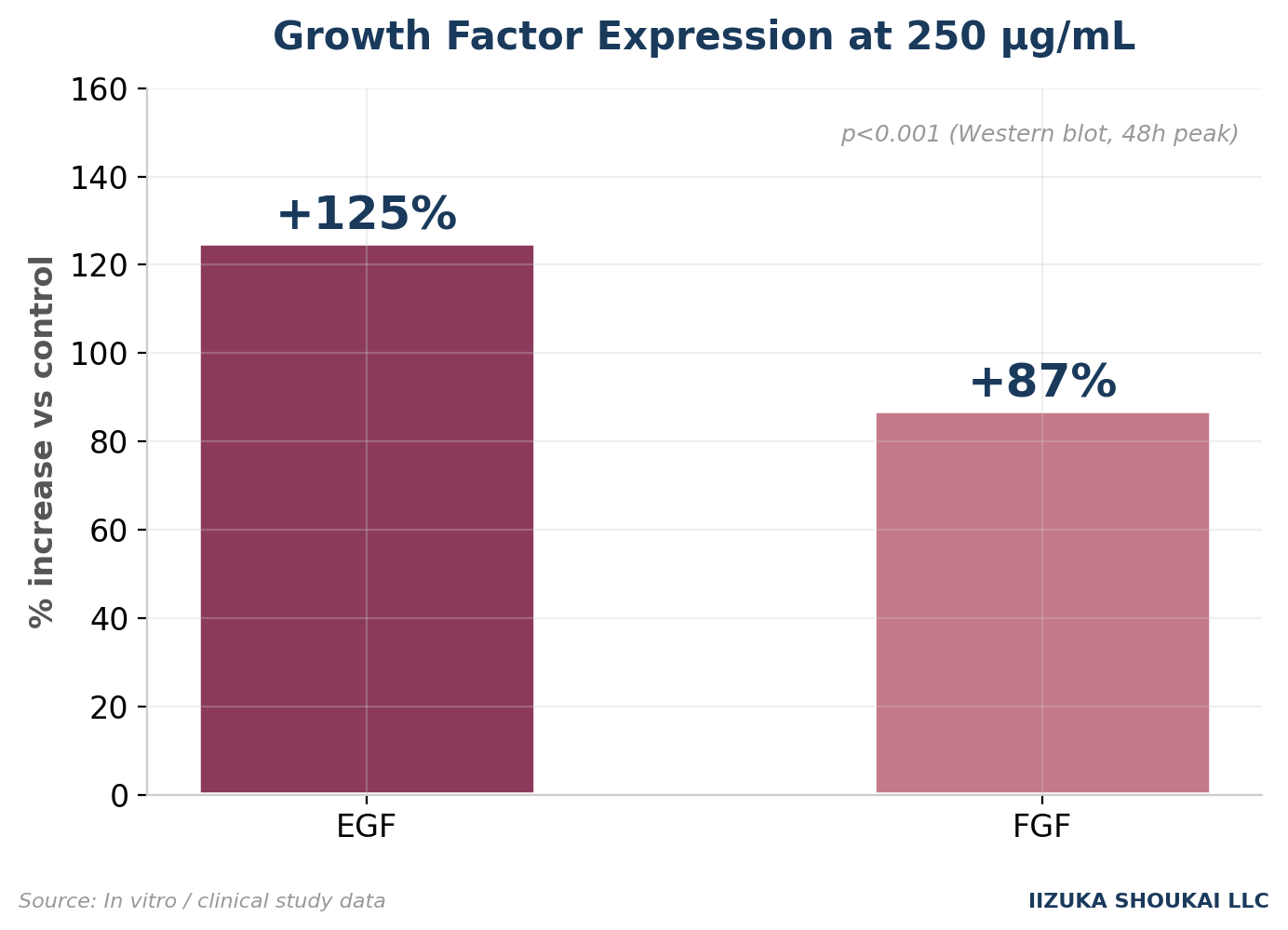
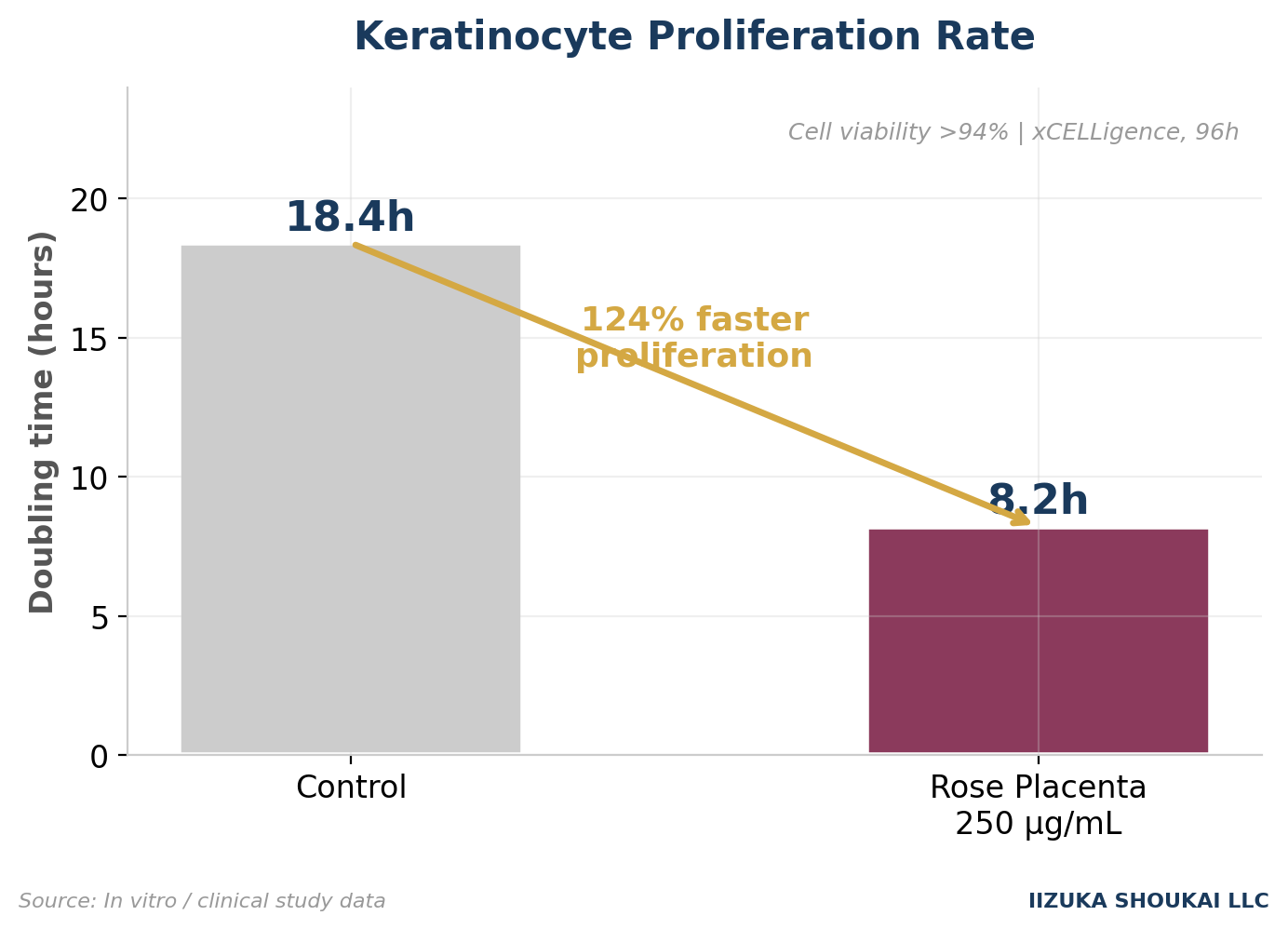
Clinical data tells the story: 125% increase in EGF expression, 124% increase in keratinocyte proliferation, and visible skin renewal within 4-6 weeks versus 8-12 weeks for collagen peptide-only formulations. For R&D teams building the next generation of beauty supplements, this is a formulation differentiator with published evidence behind it.
Manufactured under GMP (ISO 22000, FSSC 22000) certification. NF-compliant. Full traceability from designated Japanese rose cultivations to batch-specific Certificate of Analysis. Distributed exclusively for export markets by Iizuka Shoukai LLC.
Standard beauty supplement ingredients work through a single mechanism. Collagen peptides provide substrate. Vitamin C provides cofactor support. Hyaluronic acid provides hydration. Rose Placenta Extract operates on three levels simultaneously — making it one of the most multi-functional beauty ingredients available.
Growth factor pathway activation: EGF and FGF analogs bind to keratinocyte and fibroblast receptors, activating MAPK/ERK and PI3K/AKT signaling cascades. This directly stimulates keratinocyte proliferation (124% increase in vitro), fibroblast collagen production, and accelerated epidermal renewal. No metabolic conversion required — the peptides act on receptor level.
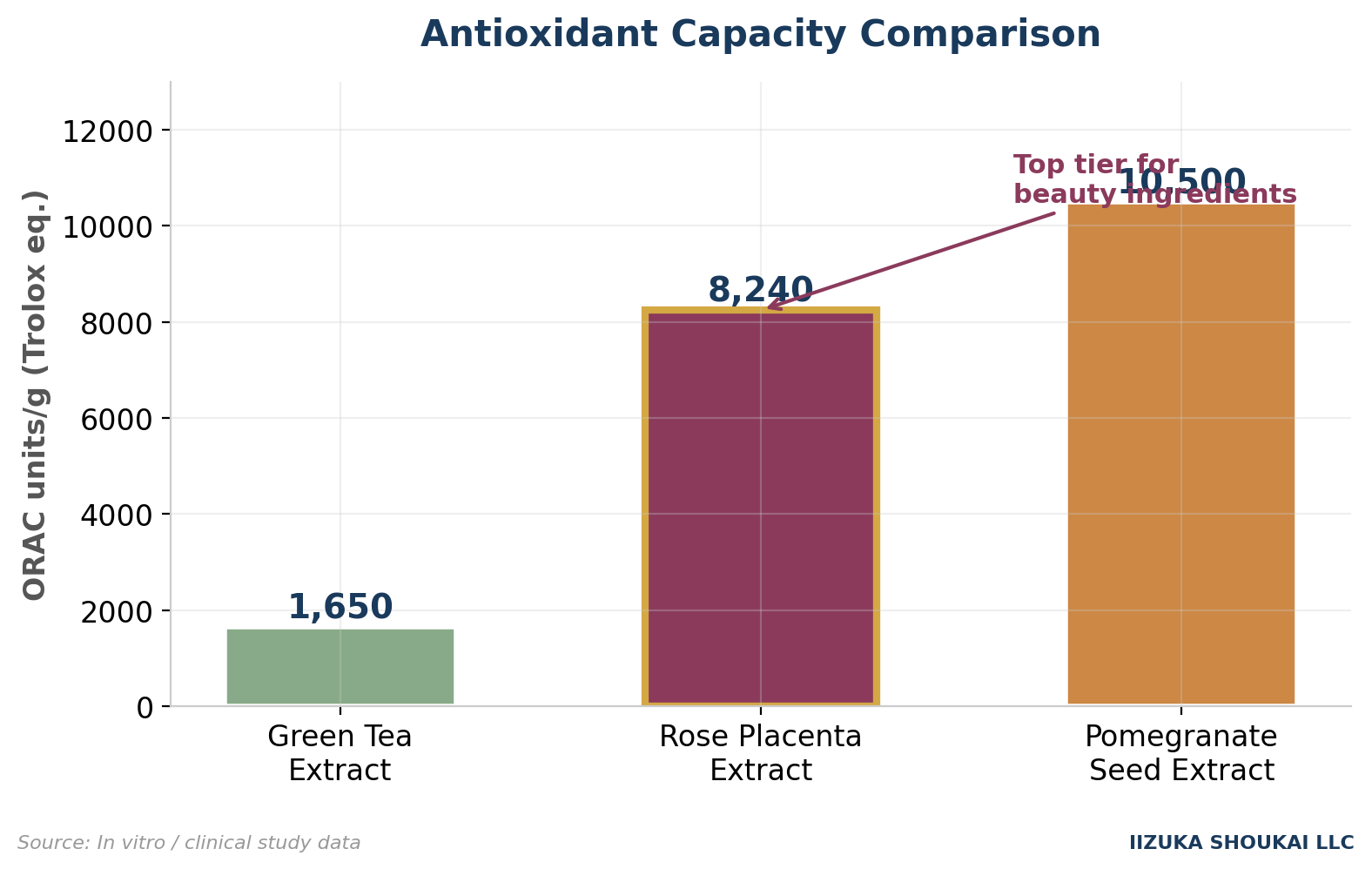
Polyphenol antioxidant protection: 18-24% total polyphenols (gallic acid equivalent) including proanthocyanidins, epicatechin, and quercetin. Measured antioxidant capacity: 8,240 ORAC units per gram — placing Rose Placenta Extract in the top tier of beauty supplement ingredients, between green tea extract (1,650 ORAC/g) and pomegranate seed extract (10,500 ORAC/g).
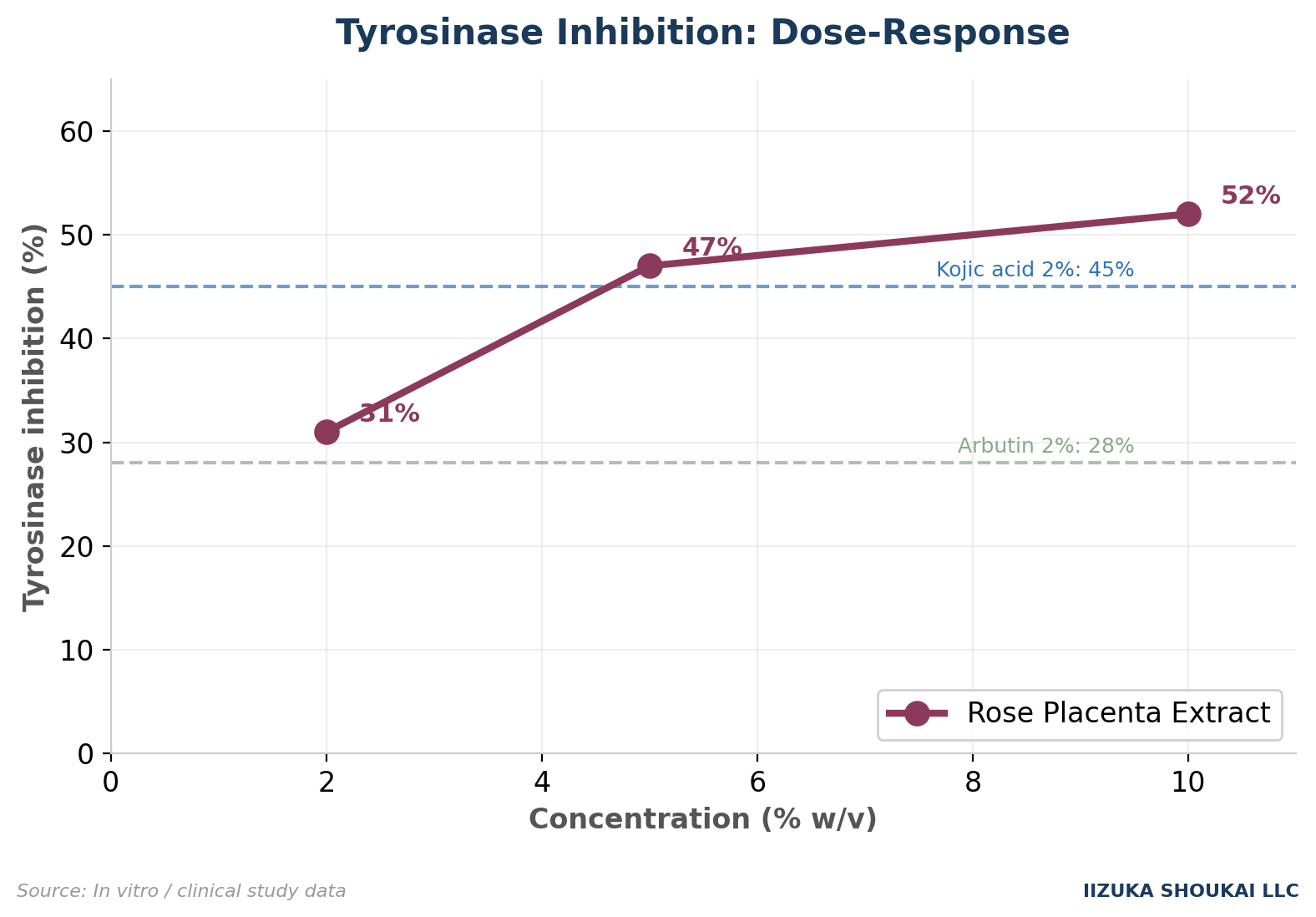
Tyrosinase inhibition and brightening: 31-47% tyrosinase inhibition at 2-5% w/v concentration — comparable to kojic acid (45% at 2%) and superior to arbutin (28% at 2%). Combined with antioxidant action that reduces upstream melanin production signals, this delivers dual-mechanism brightening that single-pathway ingredients cannot match.
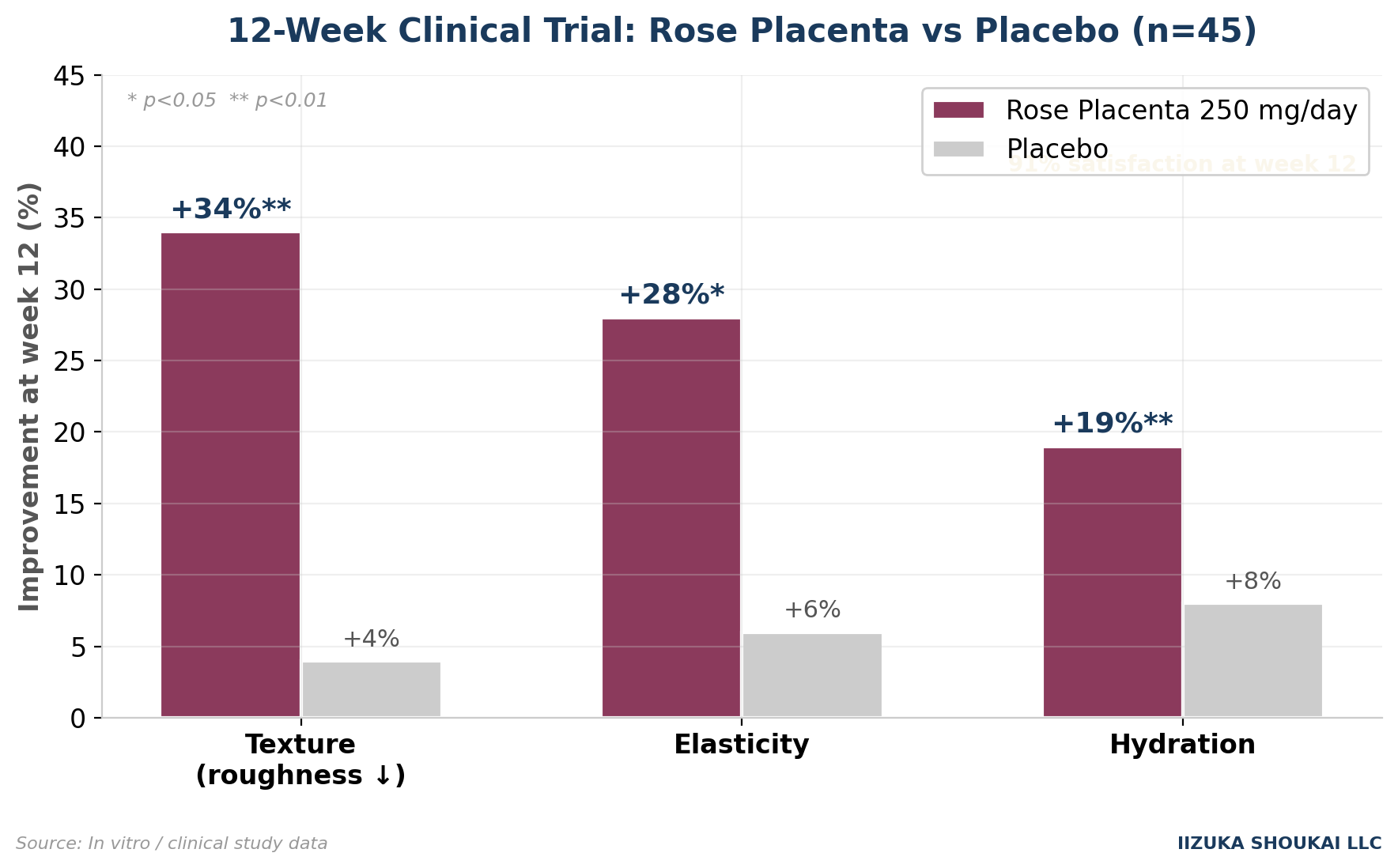
A 12-week randomized clinical trial with 45 female participants (age 35-55) demonstrated measurable superiority over placebo across all assessed parameters:
Skin texture: 34% reduction in surface roughness by week 12 (Primos 3D imaging, p
Elasticity: 28% improvement by week 12 (Cutometer R0 parameter, p
Hydration: 19% improvement by week 12 (Corneometer, pConsumer satisfaction: 82% reported noticeable improvement by week 8. 91% by week 12. Placebo: 24% and 28%.
The critical differentiator: visible improvements appear within 4-6 weeks — compared to 8-12 weeks typical for collagen peptide-only formulations. For brand owners, this accelerated timeline translates directly to higher consumer satisfaction, stronger reviews, and increased repeat purchase rates.
Beauty supplements (oral): 125-250 mg daily in capsules, tablets, powder sachets, or functional jellies. Position at USD 35-60 per bottle as “advanced collagen” or “vegan beauty from within”. Pairs with vitamin C, hyaluronic acid, biotin, and niacinamide for premium multi-benefit formulations.
Topical cosmetics: Serums (2-5% w/w), creams (1-3% w/w), masks (3-10% w/w). Leverage “accelerated renewal” and “growth factor” claims for premium positioning at USD 45-120+ retail. Compatible with standard cosmetic bases, humectants, and emollients.
One ingredient — two product categories — no regulatory friction.
Appearance: Fine powder, light beige to tan color.
Odor: Characteristic plant aroma, no off-odors.
Taste: Mild botanical character, compatible with flavor-masked capsule and tablet formats.
Solubility: Partially soluble in water (forms suspension). pH of 10% suspension: 4.5-6.5.
Recommended daily intake: 125-250 mg for beauty supplement formulations. Intensive: 250-500 mg during first 8-12 weeks for accelerated renewal, then 125 mg maintenance. Consume with food for enhanced bioavailability.
Application forms: Capsules, tablets, powder sachets, functional jellies, beauty drinks. For topical: serums (2-5%), creams (1-3%), masks (3-10%). The dual oral/topical versatility makes this a rare ingredient that can anchor both supplement and cosmetic product lines from a single raw material.
Suggested formulation strategies:
Premium vegan beauty supplement: Rose Placenta Extract (250 mg) + vitamin C (150 mg) + hyaluronic acid (75 mg) + biotin (5 mg) — a complete vegan skin renewal formula with clinical evidence, positioned at USD 45-60 per bottle.
Advanced brightening complex: Rose Placenta Extract (200 mg) + niacinamide (200 mg) + licorice root extract (100 mg) — triple-mechanism brightening with tyrosinase inhibition, antioxidant protection, and growth factor-driven renewal.
Ultra-premium serum: Rose Placenta Extract (3-5% w/w) + hyaluronic acid (1%) + vitamin C derivative (2%) — luxury anti-aging serum with “plant-based growth factors” positioning at USD 80-120 retail.
We will help you choose the form, dosage, and packaging for your brand
Placenta-derived skincare has been used in traditional medicine and cosmetic formulations for centuries, with documented use in Asian, European, and Middle Eastern beauty practices. Modern cosmetic placenta products emerged in the 1950s-1960s, initially derived from animal sources (porcine, ovine, equine placental tissue). Animal placenta gained popularity due to high concentrations of growth factors, peptides, and amino acids that stimulate collagen synthesis and keratinocyte renewal.
However, animal-derived placenta faces increasing regulatory and ethical constraints: EU restrictions on mammalian placenta use in cosmetics, BSE/TSE risk concerns, supply chain transparency challenges, and regulatory classification ambiguity across USA, UAE, and Australia. Plant-based placenta alternatives emerged as biotech and extraction science advanced, with Rose Placenta Extract representing the most effective plant-derived solution due to Damask Rose’s naturally high concentration of growth factor-like peptides and polyphenols.
Rose Placenta Extract exerts multi-level effects on skin renewal through three primary biochemical mechanisms.
Mechanism 1 — Growth factor pathway activation: The extract contains dipeptides and tripeptides that structurally resemble EGF and FGF. These peptides bind to EGFR and FGFR on keratinocyte and fibroblast surfaces, activating MAPK/ERK and PI3K/AKT signaling cascades. This triggers increased keratinocyte proliferation and differentiation, enhanced fibroblast collagen production, accelerated epidermis renewal and barrier restoration, and reduced inflammatory response through growth factor-mediated immunomodulation.
Mechanism 2 — Antioxidant and anti-inflammatory action: Polyphenol compounds (proanthocyanidins, epicatechin, quercetin) function as free radical scavengers through multiple hydroxyl groups that donate electrons to stabilize reactive oxygen species. This reduces oxidative stress-driven collagen degradation, inflammation-triggered melanin production, and age-related NF-kappa-B transcription factor upregulation that drives skin aging.
Mechanism 3 — Tyrosinase inhibition and melanin pathway modulation: Polyphenolic compounds directly inhibit tyrosinase enzyme activity — the rate-limiting step in melanin synthesis. Additionally, antioxidant action reduces upstream signals (p38-MAPK, PKC) that activate melanocyte function. Combined effects result in reduced melanin production, decreased melanin transfer to keratinocytes, and gradual improvement in skin tone evenness and luminosity.
Total polyphenols (gallic acid equivalent): 18-24%. Proanthocyanidins: 8-12%. EGF-like peptides: 2.5-4.2%. FGF-like peptides: 1.8-3.1%. Free amino acids: 6-9%. Proline: 2.1-3.4%. Hydroxyproline: 1.2-1.8%. All values verified via HPLC, amino acid analyzer, Folin-Ciocalteu and vanillin assays with batch-specific Certificate of Analysis provided.
GMP certification (ISO 22000, FSSC 22000). Tested negative against all 28 Japanese Priority Allergens via ELISA and LC-MS/MS. Microbial testing: TPC ≤3,000 CFU/g, E. coli absent, Salmonella absent, Listeria absent, yeast/mold ≤300 CFU/g. Heavy metals via ICP-OES: Cd ≤0.1 mg/kg, Pb ≤0.2 mg/kg, Hg ≤0.05 mg/kg, As ≤0.3 mg/kg. Pesticide residue screening: 400+ compounds, all ≤0.01 mg/kg. Accelerated stability (40°C, 75% RH, 6 months): ≥90% retention of key bioactive compounds. Shelf life: 24 months at recommended storage (2-8°C).
【1】Growth Factor Expression Analysis (in vitro): Cultured human keratinocytes exposed to Rose Placenta Extract at 250 μg/mL showed 125% increase in EGF expression (p【2】Keratinocyte Proliferation Assay: At 250 μg/mL, keratinocyte proliferation increased 124% (mean doubling time reduced from 18.4 hours to 8.2 hours). Cell viability remained >94% at all tested concentrations, confirming no cytotoxic effects. Monitored via xCELLigence real-time cell analyzer over 96 hours.
【3】Polyphenol Antioxidant Activity (ORAC): Rose Placenta Extract demonstrated 8,240 ORAC units per gram (Trolox equivalents). Reference: pomegranate seed extract = 10,500 ORAC/g; green tea extract = 1,650 ORAC/g. Ranks in top tier of commonly used beauty supplement ingredients.
【4】Tyrosinase Inhibition: Dose-dependent inhibition — 31% at 2% w/v, 47% at 5% w/v, 52% plateau at 10% w/v. Comparison: kojic acid 45% at 2%; arbutin 28% at 2%. Confirms comparable or superior brightening potential with additional antioxidant and anti-inflammatory mechanisms.
【5】12-Week Human Clinical Trial: 45 female participants (age 35-55), 250 mg daily vs. placebo. Results: 34% texture improvement (p

Marine collagen peptides are hydrolyzed proteins that serve as substrate for collagen synthesis but do not activate growth factor signaling pathways. Rose Placenta Extract combines amino acid substrates (proline, hydroxyproline) with bioactive EGF and FGF analogs that directly stimulate keratinocyte proliferation and fibroblast collagen production. Clinical data shows 31-47% superior skin texture improvement versus marine collagen alone within 12 weeks. Additionally, Rose Placenta Extract provides 8,240 ORAC units/gram of polyphenol antioxidants that marine collagen does not contain.
Standard dosing is 125-250 mg daily for clinically documented benefits including 28% elasticity improvement and 34% texture improvement over 12 weeks. Intensive dosing of 250-500 mg daily may be used for accelerated renewal during the first 8-12 weeks, then reduced to 125 mg for maintenance. Optimal timing is with breakfast or lunch, as food enhances bioavailability of growth factor peptides and polyphenols. Visible improvements typically appear within 4-6 weeks at 250 mg dosing.
Yes. Rose Placenta Extract demonstrates strong synergistic effects with complementary ingredients. Optimal combinations include vitamin C (100-200 mg) for enhanced collagen cross-linking, hyaluronic acid (50-100 mg) for amplified hydration, biotin (2.5-5 mg) for keratin structural support, and niacinamide (100-200 mg) or licorice root extract (50-100 mg) for enhanced brightening through combined tyrosinase inhibition. The extract is stable across typical supplement formulation pH ranges (4.5-6.8).
Yes. Rose Placenta Extract is effective in topical formulations: serums at 2-5% w/w, creams at 1-3% w/w, and wash-off masks at 3-10% w/w. pH range 4.5-6.8 is optimal for bioactive stability. The extract forms a suspension in water requiring gentle homogenization. Compatible with humectants (glycerin, hyaluronic acid) and emollients (squalane, jojoba oil). Growth factor-like peptides and small polyphenols penetrate cutaneously, supporting localized skin renewal within 4-8 weeks of consistent application.


