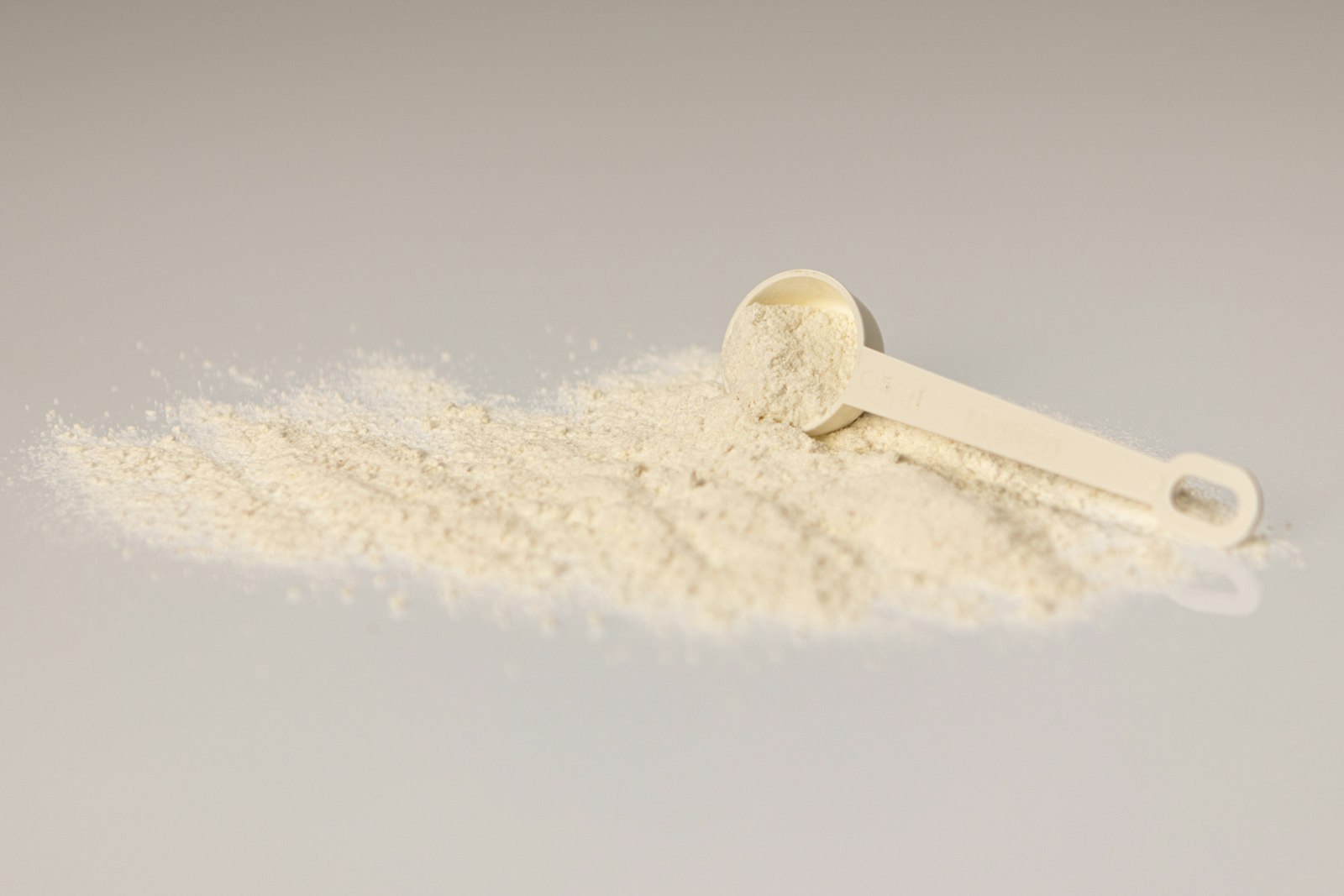
A fish collagen peptide powder made in Japan by enzymatic hydrolysis of gelatin from fish scale and fish skin. It dissolves in cold water, and its specification sets solution clarity (transmittance min. 90%) and viscosity (0.8-1.6 mPa·s at 12.5%). A 2025 lot measured a weight-average molecular weight of 2,321 Da.
Tell us what you are developing and which documents you need. We reply from Japan within one working day with the product specification, SDS and the CoA of the current lot.
The powder is made in Japan from fish scale and fish skin. The raw material is soaked in acid and washed, gelatin is extracted, and enzymes break it down into collagen peptides; the solution is then purified by filtration, heat-sterilised and dried. Each lot is tested for viscosity, transmittance, moisture, ash and pH by JIS K 6503-2001 methods, and for plate count, coliforms, arsenic and heavy metals.
Step 1 · raw material
Thailand, Indonesia, Vietnam, China and other countries
Step 2 · pre-treatment
Raw material soaked in acid
Step 3 · water
Washed with water
Step 4 · gelatin
Gelatin extracted from the raw material
Step 5 · enzymes
Gelatin broken down into collagen peptides
Step 6 · filtration
Purified peptide solution
Step 7 · heat
Before drying
Step 8 · powder
Packed net 10 kg per bag
The grade on this page. Other grades, where available, are specified on request.
Example lot values are published in the developer's guide below. They are an example, not a specification; your lot's CoA governs.
A Japanese trading company selling directly to brand owners and contract manufacturers. No distributor layer between you and the documents.
Every shipment travels with the Certificate of Analysis of its own lot, with the measured values and the full safety panel.
A small first order lets you run a pilot batch before committing to bulk. Larger volumes are quoted by volume and delivery terms.
For registered companies developing a product. Tell us the format you plan and we will say honestly what to expect.
After payment is received. Freight quoted on request. Specification and SDS before you order, CoA with the goods.
If you are comparing ingredients for a new SKU, these questions separate one material from another quickly.
The specification sets transmittance at min. 90%, and a 2025 lot measured 98.5%. Clarity in a finished drink also depends on pH, other ingredients and heat treatment, so run a bench test with the sample.
The manufacturer declares gelatin as the allergen. The raw material is fish, so check the fish allergen rules of your market for the finished label.
The specification names the raw material (fish scale and fish skin) and the raw material countries, not the species. If your label or a certification body needs the species, ask before you order.
A halal or kosher certificate is not part of the standard document set (specification, lot CoA, SDS). Ask before you plan a launch that depends on one.
Some markets ask for extra documents for ingredients of fishery or animal origin. Check with your customs broker before you order; we provide the specification, lot CoA and SDS.
The powder is hygroscopic, and UV light can harden it and make it less soluble. Plan closed, light-shielding storage once a 10 kg bag is opened.
What each component is, what the processing changes, and what published research on the raw material has examined. No health claims; references on request.
This is a standard fish collagen peptide: a gelatin hydrolysate made in Japan from fish scale and fish skin and supplied as a single-ingredient powder. Its specification is built around how the powder behaves in solution - viscosity and transmittance - together with moisture, ash, pH, microbiology, arsenic and heavy metals. Every lot ships with its certificate of analysis.
The manufacturer lists these uses: raw material for health foods in tablets and drinks; general foods such as confectionery and bread; and bath additives, soap and other cosmetics.
We supply two fish collagen ingredients with different specifications. This collagen peptide is specified by solution quality, and its molecular weight is measured by gel permeation chromatography. Fish Collagen Tripeptide is specified by a minimum tripeptide content, measured on every lot. Choose by what your formula and label need.
MOQ is one 10 kg bag. Free 100 g evaluation samples are available for registered businesses, and the specification and SDS are available on request. Orders ship from Japan 1-1.5 weeks after payment when stock is available; freight is quoted on request.
Related ingredient: fish elastin peptide. For finished products, see our OEM supplement manufacturing.
Collagen is the most abundant protein in animals [1]. It is built mainly from glycine, about 33% of its amino acids, together with proline and hydroxyproline, about 22% [2]. The typical amino acid profile of this powder follows the same pattern: glycine 33.5%, proline 10.6% and hydroxyproline 7.6%, according to the manufacturer's product leaflet.
Hydrolysed collagen, also called collagen peptide, is a group of low-molecular-weight peptides obtained by breaking collagen down, and it is highly soluble in water [2]. Its properties depend on the raw material, the extraction method and the enzyme used [2]. In this product, gelatin extracted from fish scale and fish skin is broken down by enzymes, which is why the safety data sheet gives its chemical name as gelatin hydrolysate.
A collagen peptide powder is a mixture of peptides of different lengths, so its molecular weight is an average. Collagen hydrolysates are commonly characterised by an average molecular weight, for example about 2,000 or 5,000 Da [3]. Weight-average molecular weight (Mw), measured by gel permeation chromatography, is one way to express it. For this powder, a 2025 lot measured Mw 2,321 Da. Molecular weight is reported per lot; it is not a specification limit.
The review literature describes fish skin, scales and bones as sources of hydrolysed collagen, and notes that porcine and bovine sources face limitations such as disease concerns and religious restrictions [2]. This product is made from fish scale and fish skin only. A halal or kosher certificate is not part of its standard document set.
Typical composition, % of amino acids, from the manufacturer's product leaflet: glycine 33.5, alanine 12.3, proline 10.6, hydroxyproline 7.6, glutamic acid 7.3, arginine 5.0, aspartic acid 4.8, serine 4.2, threonine 2.8, lysine 2.6, leucine 2.4, valine 1.9, phenylalanine 1.3, isoleucine 1.1, hydroxylysine 0.9, methionine 0.8, histidine 0.6, tyrosine 0.2. Cysteine and tryptophan are listed at 0.
The manufacturer declares gelatin as the allergen, with the Japanese label example "collagen peptide (contains gelatin)". The raw material is fish: check the fish allergen rules of your market when you label the finished product.
The powder is hygroscopic, and UV light can harden it and make it less soluble. After opening, keep it in a closed, light-shielding container in a cool, dark place. The safety data sheet lists no special protective equipment for handling.
Start at the minimum order. Free sample. Specification, SDS and lot CoA on request.
Request a sample or quotationThis is a standard fish collagen peptide: a gelatin hydrolysate made in Japan from fish scale and fish skin and supplied as a single-ingredient powder. Its specification is built around how the powder behaves in solution - viscosity and transmittance - together with moisture, ash, pH, microbiology, arsenic and heavy metals. Every lot ships with its certificate of analysis.
The manufacturer lists these uses: raw material for health foods in tablets and drinks; general foods such as confectionery and bread; and bath additives, soap and other cosmetics.
We supply two fish collagen ingredients with different specifications. This collagen peptide is specified by solution quality, and its molecular weight is measured by gel permeation chromatography. Fish Collagen Tripeptide is specified by a minimum tripeptide content, measured on every lot. Choose by what your formula and label need.
MOQ is one 10 kg bag. Free 100 g evaluation samples are available for registered businesses, and the specification and SDS are available on request. Orders ship from Japan 1-1.5 weeks after payment when stock is available; freight is quoted on request.
Related ingredient: fish elastin peptide. For finished products, see our OEM supplement manufacturing.
Collagen is the most abundant protein in animals [1]. It is built mainly from glycine, about 33% of its amino acids, together with proline and hydroxyproline, about 22% [2]. The typical amino acid profile of this powder follows the same pattern: glycine 33.5%, proline 10.6% and hydroxyproline 7.6%, according to the manufacturer's product leaflet.
Hydrolysed collagen, also called collagen peptide, is a group of low-molecular-weight peptides obtained by breaking collagen down, and it is highly soluble in water [2]. Its properties depend on the raw material, the extraction method and the enzyme used [2]. In this product, gelatin extracted from fish scale and fish skin is broken down by enzymes, which is why the safety data sheet gives its chemical name as gelatin hydrolysate.
A collagen peptide powder is a mixture of peptides of different lengths, so its molecular weight is an average. Collagen hydrolysates are commonly characterised by an average molecular weight, for example about 2,000 or 5,000 Da [3]. Weight-average molecular weight (Mw), measured by gel permeation chromatography, is one way to express it. For this powder, a 2025 lot measured Mw 2,321 Da. Molecular weight is reported per lot; it is not a specification limit.
The review literature describes fish skin, scales and bones as sources of hydrolysed collagen, and notes that porcine and bovine sources face limitations such as disease concerns and religious restrictions [2]. This product is made from fish scale and fish skin only. A halal or kosher certificate is not part of its standard document set.
Typical composition, % of amino acids, from the manufacturer's product leaflet: glycine 33.5, alanine 12.3, proline 10.6, hydroxyproline 7.6, glutamic acid 7.3, arginine 5.0, aspartic acid 4.8, serine 4.2, threonine 2.8, lysine 2.6, leucine 2.4, valine 1.9, phenylalanine 1.3, isoleucine 1.1, hydroxylysine 0.9, methionine 0.8, histidine 0.6, tyrosine 0.2. Cysteine and tryptophan are listed at 0.
The manufacturer declares gelatin as the allergen, with the Japanese label example "collagen peptide (contains gelatin)". The raw material is fish: check the fish allergen rules of your market when you label the finished product.
The powder is hygroscopic, and UV light can harden it and make it less soluble. After opening, keep it in a closed, light-shielding container in a cool, dark place. The safety data sheet lists no special protective equipment for handling.
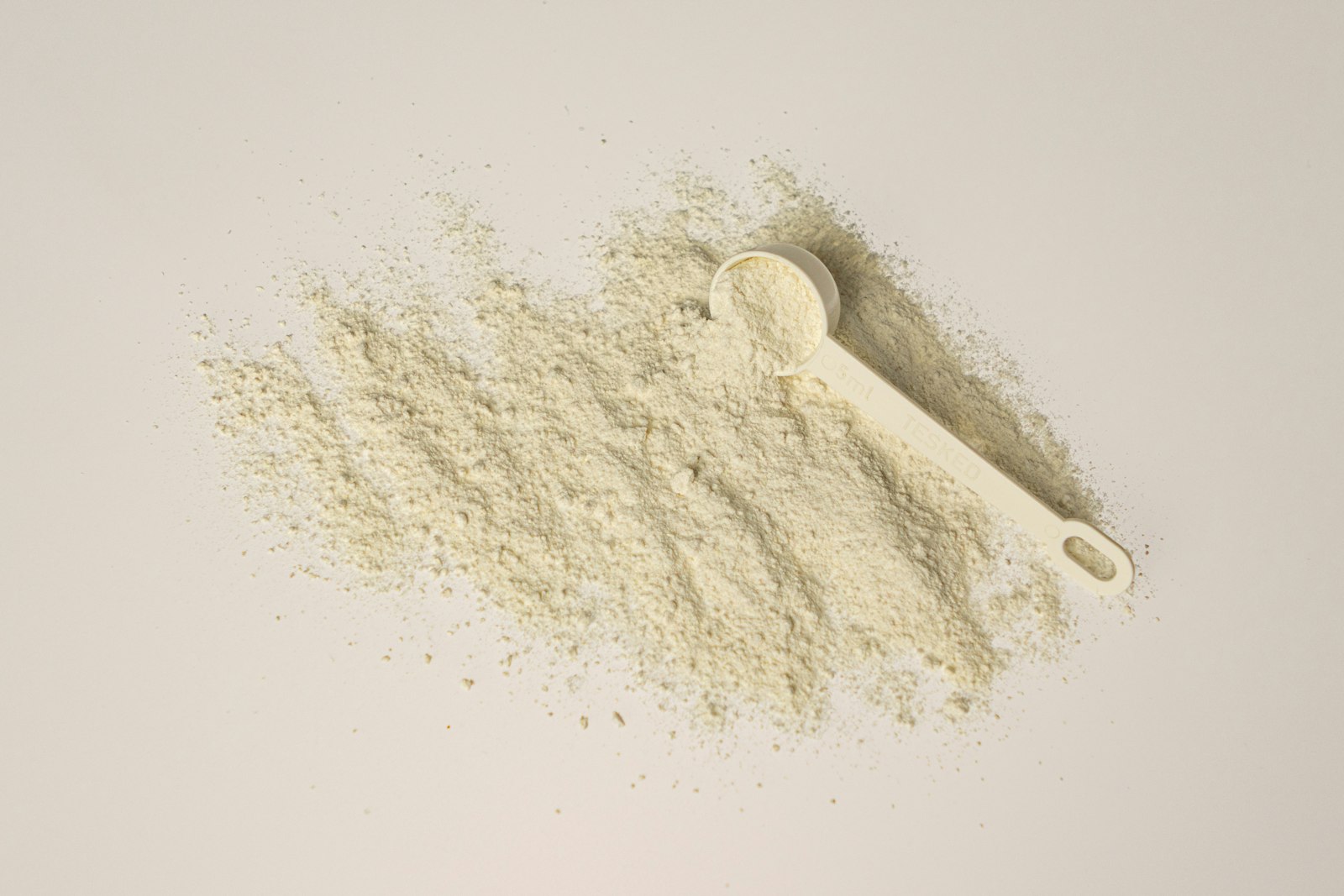
It is a fish collagen peptide powder, chemically a gelatin hydrolysate, made in Japan from fish scale and fish skin. The raw material is soaked in acid and washed, gelatin is extracted and broken down by enzymes, and the solution is filtered, heat-sterilised and dried. The powder is a single ingredient, 100% fish collagen peptide, white or pale yellow and soluble in cold water.
MOQ is 10 kg, one original bag, at 38 USD/kg. Larger orders are quoted by volume, and freight is quoted on request. Payment is 100% prepayment by SWIFT or Stripe; orders ship from Japan 1-1.5 weeks after payment when stock is available, with the lot certificate of analysis, and lead time for larger volumes is confirmed in the quotation. Free 100 g evaluation samples are available for registered businesses.
The two are specified differently. This fish collagen peptide is specified by solution quality - viscosity 0.8-1.6 mPa·s at 12.5% and transmittance min. 90% - plus moisture, ash, pH, microbiology, arsenic and heavy metals; its molecular weight is measured by gel permeation chromatography (Mw 2,321 Da on a 2025 lot). Fish Collagen Tripeptide is specified by a minimum tripeptide content of at least 15% or 25%, measured on every lot. Choose by what your formula and label need.
The powder dissolves in cold water, and the specification sets transmittance at min. 90%; a 2025 lot measured 98.5%, with a viscosity of 1.2 mPa·s at 12.5%. Clarity in a finished drink also depends on pH, other ingredients and heat treatment, so confirm it with a sample in your own formula.


