Japan-grown soybeans are sprouted, fermented into tempeh with an Indonesian tempeh starter, then dried and milled into powder. Per 100 g the producer reports 36.4 g protein and 21.1 g dietary fibre, and a 2024 lab analysis measured 6.9 mg iron. The standard grade adds B vitamins from yeast, formulated to give 2.4 µg vitamin B12 in 20 g.
Tell us what you are developing and which documents you need. We reply from Japan within one working day with the product specification, SDS and the CoA of the current lot.
The soybeans are grown in Japan and sprouted before fermentation, so the tempeh is made from young sprouted beans. An Indonesian tempeh starter, a Rhizopus mould, grows through the cooked beans and binds them into tempeh, which is then dried and milled. The standard grade is blended with B vitamins from yeast.
Step 1 · whole beans
Soybeans grown in Japan
Step 2 · sprouted beans
Beans are sprouted before fermentation
Step 3 · Indonesian tempeh starter
Rhizopus mould grows through the cooked beans
Step 4 · moisture max. 10%
Typically about 9% moisture
Step 5 · B vitamins from yeast
Formulated for 2.4 µg vitamin B12 per 20 g
Step 6 · 1 kg aluminium bags
10 bags per carton, no oxygen absorber
The grade on this page. Other grades, where available, are specified on request.
Typical values per 100 g, producer nutrition data for the tempeh powder.
Example lot values are published in the developer's guide below. They are an example, not a specification; your lot's CoA governs.
A Japanese trading company selling directly to brand owners and contract manufacturers. No distributor layer between you and the documents.
Every shipment travels with the Certificate of Analysis of its own lot, with the measured values and the full safety panel.
A small first order lets you run a pilot batch before committing to bulk. Larger volumes are quoted by volume and delivery terms.
For registered companies developing a product. Tell us the format you plan and we will say honestly what to expect.
After payment is received. Freight quoted on request. Specification and SDS before you order, CoA with the goods.
If you are comparing ingredients for a new SKU, these questions separate one material from another quickly.
The standard grade carries B vitamins from yeast. The plain tempeh powder measured only 0.10 µg B12 per 100 g, so a B12 label needs the standard grade. If you want tempeh powder without added vitamins, tell us and we will check availability.
The B12 design is based on 20 g a day. That is a food-sized serving, about forty 500 mg capsules, so powders, stick packs and foods are the practical formats.
Claims for B12, iron, protein or fibre depend on the amount per serving in your finished product and on the rules of your market. Plan a check of the finished product with your regulatory advisor.
The powder is made from whole soybeans, and soy is a mandatory allergen declaration in many markets.
This ingredient has no halal or kosher certificate, and vinegar is used in production. Food supplements for the UAE need halal certification, so check this before you plan a launch there.
Tell us before you order. Nutrition data, the amino acid profile and the lab analyses for iron, vitamin B12 and polyamines are available; we confirm what else exists for the current lot.
What each component is, what the processing changes, and what published research on the raw material has examined. No health claims; references on request.
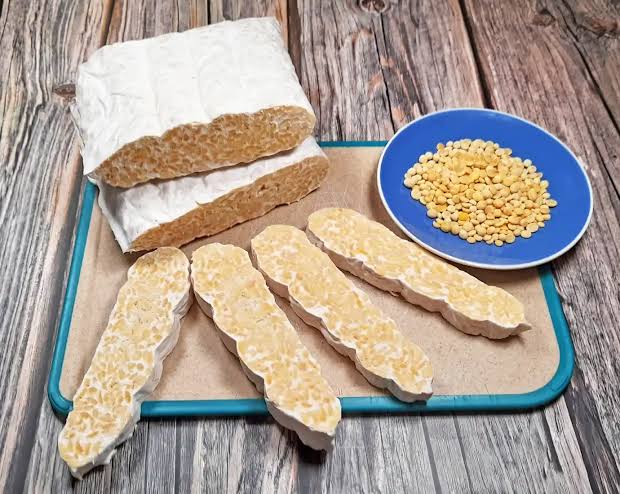
Tempeh is a traditional Indonesian fermented soybean food. This version is made in Japan from soybeans that are sprouted before fermentation, then dried and milled, so it goes into a formula as a powder rather than as a fresh cake.
The standard grade is built around vitamin B12, which occurs naturally in foods of animal origin rather than in plants. B vitamins from yeast are blended in so that 20 g provides 2.4 µg of B12. The tempeh itself brings protein, dietary fibre and iron, with no animal ingredients.
For a higher protein concentration in a plant-based formula, see Yeast Protein 80%. Another fermented soy ingredient in the range is Nattokinase Extract Powder 40,000 FU/g.
Finished products can be filled and packed at our own Tomioka Plant in Gunma. Tell us the format you plan and we will say honestly what to expect. Request a quote or a sample.
This section explains what tempeh is and why the standard grade adds vitamin B12. It describes the food and its nutrients from published sources; it is not a set of claims for this ingredient.
Tempeh is made by growing a Rhizopus mould through cooked soybeans until the beans bind into a firm cake. A review of 60 years of tempeh research describes tempeh fermentation as a low-cost way to make protein-rich foods from beans, legumes and grains, and notes that more research is needed on its effects on human health (Ahnan-Winarno et al., 2021).
The US Office of Dietary Supplements (NIH) states that vitamin B12 is found in foods of animal origin and is not naturally present in plant foods, although some plant foods are fortified with it. The Recommended Dietary Allowance for adults in the US is 2.4 µg per day. The same fact sheet lists tempeh at 0.1 µg per half cup.
Where tempeh does contain B12, research on Indonesian tempeh traced it to bacteria growing alongside the mould rather than to the mould itself, and showed that the amount depended on fermentation conditions (Keuth and Bisping, 1994). A review of plant-derived B12 sources for vegetarians found that only a few plant foods contain substantial amounts (Watanabe et al., 2014). The plain tempeh powder behind this ingredient measured 0.10 µg per 100 g in a 2025 lab analysis, which is why the standard grade adds B vitamins from yeast, formulated to provide 2.4 µg in 20 g.
NIH describes iron as an essential component of hemoglobin, the red blood cell protein that carries oxygen. Plant foods contain only nonheme iron, which is less bioavailable than the heme iron in meat; for this reason the iron requirement for people on vegetarian diets is set 1.8 times higher. The dried tempeh in this ingredient measured 6.9 mg iron per 100 g in a 2024 lab analysis, about 1.4 mg in a 20 g serving.
Putrescine, spermidine and spermine are polyamines, bioactive compounds measured in many foods. A food polyamine database compiled from published data found fruits and cheese to be the highest sources of putrescine, vegetables rich in spermidine and meat products rich in spermine (Atiya Ali et al., 2011). A 2022 lab analysis of the plain tempeh powder measured spermidine 10 mg, spermine 2.4 mg and putrescine 2.9 mg per 100 g. We report these as composition data only.
Soybeans carry isoflavones mainly as glucosides such as genistin and daidzin. During fermentation with Rhizopus, the enzyme beta-glucosidase converts them to the aglycones genistein and daidzein; this has been shown, for example, in black soymilk fermented with Rhizopus oligosporus (Liu et al., 2016). The isoflavone content of this powder has not been measured, so we do not state a value.
Tempeh is a traditional food, but rules for fortified foods, nutrient claims and food supplements differ by market. The importer or brand owner checks them and registers the finished product. Food supplements for the UAE need halal certification, which this ingredient does not hold.
Start at the minimum order. Free sample. Specification, SDS and lot CoA on request.
Request a sample or quotationTempeh is a traditional Indonesian fermented soybean food. This version is made in Japan from soybeans that are sprouted before fermentation, then dried and milled, so it goes into a formula as a powder rather than as a fresh cake.
The standard grade is built around vitamin B12, which occurs naturally in foods of animal origin rather than in plants. B vitamins from yeast are blended in so that 20 g provides 2.4 µg of B12. The tempeh itself brings protein, dietary fibre and iron, with no animal ingredients.
For a higher protein concentration in a plant-based formula, see Yeast Protein 80%. Another fermented soy ingredient in the range is Nattokinase Extract Powder 40,000 FU/g.
Finished products can be filled and packed at our own Tomioka Plant in Gunma. Tell us the format you plan and we will say honestly what to expect. Request a quote or a sample.
This section explains what tempeh is and why the standard grade adds vitamin B12. It describes the food and its nutrients from published sources; it is not a set of claims for this ingredient.
Tempeh is made by growing a Rhizopus mould through cooked soybeans until the beans bind into a firm cake. A review of 60 years of tempeh research describes tempeh fermentation as a low-cost way to make protein-rich foods from beans, legumes and grains, and notes that more research is needed on its effects on human health (Ahnan-Winarno et al., 2021).
The US Office of Dietary Supplements (NIH) states that vitamin B12 is found in foods of animal origin and is not naturally present in plant foods, although some plant foods are fortified with it. The Recommended Dietary Allowance for adults in the US is 2.4 µg per day. The same fact sheet lists tempeh at 0.1 µg per half cup.
Where tempeh does contain B12, research on Indonesian tempeh traced it to bacteria growing alongside the mould rather than to the mould itself, and showed that the amount depended on fermentation conditions (Keuth and Bisping, 1994). A review of plant-derived B12 sources for vegetarians found that only a few plant foods contain substantial amounts (Watanabe et al., 2014). The plain tempeh powder behind this ingredient measured 0.10 µg per 100 g in a 2025 lab analysis, which is why the standard grade adds B vitamins from yeast, formulated to provide 2.4 µg in 20 g.
NIH describes iron as an essential component of hemoglobin, the red blood cell protein that carries oxygen. Plant foods contain only nonheme iron, which is less bioavailable than the heme iron in meat; for this reason the iron requirement for people on vegetarian diets is set 1.8 times higher. The dried tempeh in this ingredient measured 6.9 mg iron per 100 g in a 2024 lab analysis, about 1.4 mg in a 20 g serving.
Putrescine, spermidine and spermine are polyamines, bioactive compounds measured in many foods. A food polyamine database compiled from published data found fruits and cheese to be the highest sources of putrescine, vegetables rich in spermidine and meat products rich in spermine (Atiya Ali et al., 2011). A 2022 lab analysis of the plain tempeh powder measured spermidine 10 mg, spermine 2.4 mg and putrescine 2.9 mg per 100 g. We report these as composition data only.
Soybeans carry isoflavones mainly as glucosides such as genistin and daidzin. During fermentation with Rhizopus, the enzyme beta-glucosidase converts them to the aglycones genistein and daidzein; this has been shown, for example, in black soymilk fermented with Rhizopus oligosporus (Liu et al., 2016). The isoflavone content of this powder has not been measured, so we do not state a value.
Tempeh is a traditional food, but rules for fortified foods, nutrient claims and food supplements differ by market. The importer or brand owner checks them and registers the finished product. Food supplements for the UAE need halal certification, which this ingredient does not hold.

Tempeh made from sprouted soybeans grown in Japan, fermented with an Indonesian tempeh starter (Rhizopus mould), dried and milled into powder. The standard grade is blended with B vitamins from yeast; the producer states it contains all eight B vitamins. The powder contains soy and has no animal ingredients.
The standard grade is formulated to provide 2.4 µg vitamin B12 in 20 g; this is the producer's design value, not a lot analysis. The plain tempeh powder measured 0.10 µg B12 per 100 g in a 2025 lab analysis. Iron measured 6.9 mg per 100 g in a 2024 analysis of the dried tempeh, about 1.4 mg in 20 g.
The producer designed the B12 content around 20 g a day and suggests smoothies, yoghurt, plant-based burgers and meatballs, and supplements. A 20 g serving equals about forty 500 mg capsules, so powders, stick packs and foods are the practical formats. The dose of a finished product is set by the brand for its market.
The powder contains soy. The producer offers it as an ingredient for vegan foods, but there is no vegan, halal or kosher certificate. Vinegar is used in production, so ask which type if alcohol content matters for your market. Food supplements for the UAE need halal certification.


