Japanese whole fruiting-body Lion's Mane (Hericium erinaceus) micro-powder, single-origin Hokkaido or Nagano, food-grade, not mycelium. 100% fruiting body with nothing added; beta-glucan value stated per lot on the CoA. Fruiting body is not a Novel Food in the EU. Bulk supply from 1 kg.
Tell us what you are developing and which documents you need. We reply from Japan within one working day with the product specification, SDS and the CoA of the current lot.
The raw mushroom is grown in Japan under contract cultivation (Hokkaido or Nagano), then cleaned, dried and milled to a fine micro-powder under Japanese food-grade hygiene standards. Each lot is verified against the specification, and a Certificate of Analysis is supplied with every shipment.
Step 1 · Hokkaido or Nagano
Whole fruiting body, single origin
Step 2 · preparation
Fresh fruiting bodies
Step 3 · drying
Under food-grade hygiene standards
Step 4 · fine powder
Disperses without grit
Step 5 · CoA
Moisture, heavy metals, microbiology, beta-glucan
The grade on this page. Other grades, where available, are specified on request.
Example lot values are published in the developer's guide below. They are an example, not a specification; your lot's CoA governs.
A Japanese trading company selling directly to brand owners and contract manufacturers. No distributor layer between you and the documents.
Every shipment travels with the Certificate of Analysis of its own lot, with the measured values and the full safety panel.
A small first order lets you run a pilot batch before committing to bulk. Larger volumes are quoted by volume and delivery terms.
For registered companies developing a product. Tell us the format you plan and we will say honestly what to expect.
After payment is received. Freight quoted on request. Specification and SDS before you order, CoA with the goods.
If you are comparing ingredients for a new SKU, these questions separate one material from another quickly.
What each component is, what the processing changes, and what published research on the raw material has examined. No health claims; references on request.
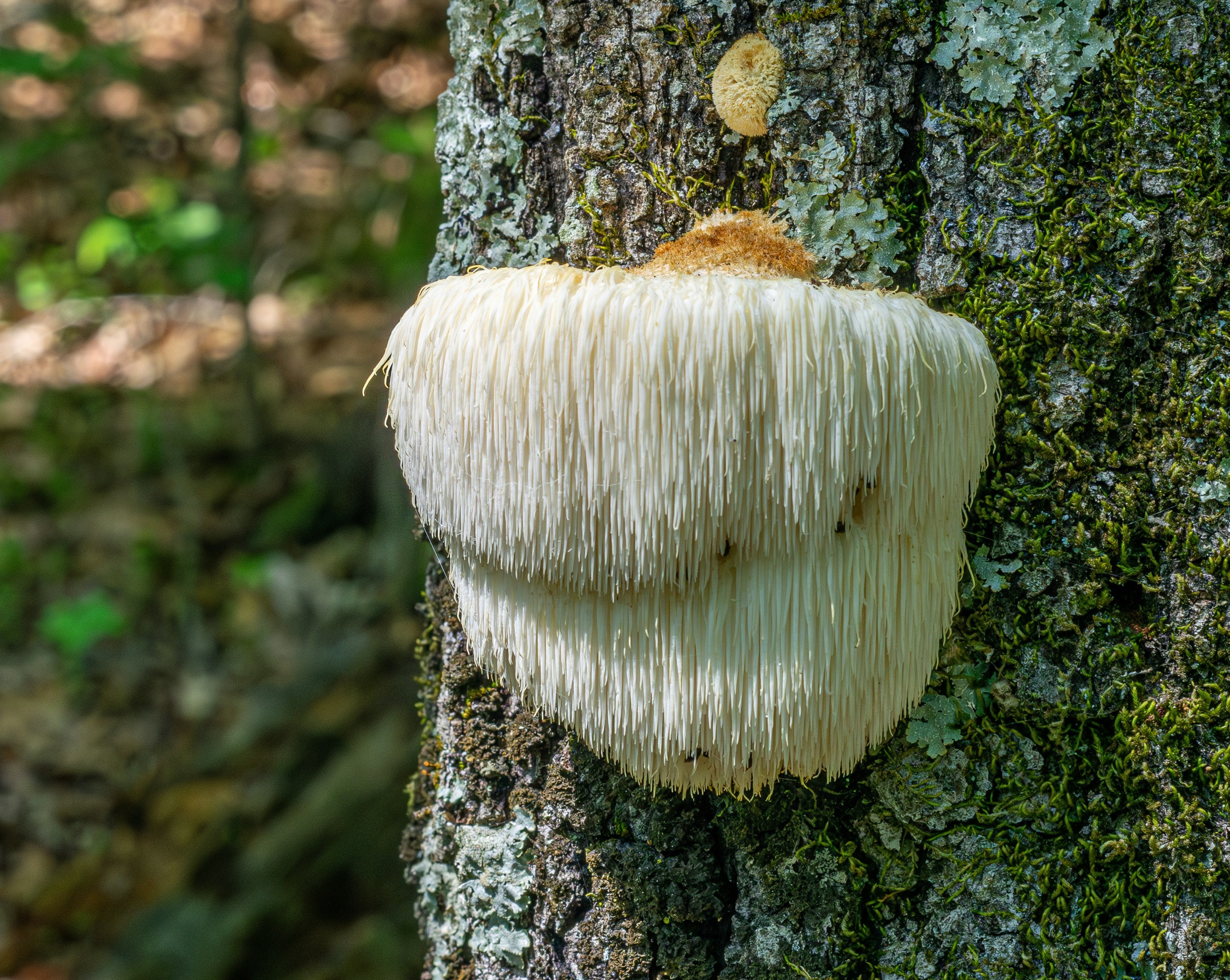
This is Lion's Mane (Hericium erinaceus, Japanese Yamabushitake) supplied as a fine, food-grade micro-powder made from the whole fruiting body of the mushroom - the cap, not mycelium grown on grain. The raw material is grown in Japan under contract cultivation, and the buyer can specify single-origin sourcing from Hokkaido or from Nagano. It is 100% Hericium erinaceus fruiting body, with nothing added.
Lion's Mane is the most in-demand mushroom in the cognitive and nootropic category, and the format here is built for that demand. The micro-powder is milled fine enough to disperse cleanly into mushroom coffee, lattes, functional blends, sticks and capsules without grit, so a finished product carries the Japanese single-origin story rather than anonymous bulk powder.
The single most important quality question in this category is fruiting body versus mycelium. Much of the cheap Lion's Mane sold as powder is mycelium grown on a grain substrate, which carries a high share of residual starch and a very different compound profile. This material is the true fruiting body, which is where the mushroom's characteristic fruiting-body compounds (including hericenones) sit. For a buyer, that is both a clean-label proof point and, in the EU, a regulatory advantage.
Beyond the cognitive literature on the species (next section), the producer maintains its own functional-research program on this raw material. These are preclinical animal studies on the producer's own powder and extract, summarised here as research findings - they are not health claims for any finished product, and permitted claims depend on the destination market.
In a series of rat and mouse models the producer reported, in animals: improved bowel regularity and gut environment with the whole powder; a significant reduction in blood glucose and a suppressed rise in blood pressure; suppressed body-weight gain and reduced visceral fat on a high-fat diet; a suppressed rise in serum triglycerides held near the normal-diet level (ICR mice, 4 weeks); and improved liver markers (lower liver mass and serum GOT/AST). An in-vitro immune-cell assay showed concentration-dependent TNF activity. A separate joint study with a prefectural food-research institute reproduced the suppression of weight gain, visceral fat and serum triglycerides in male mice, confirming the effect was not sex-dependent. The lipid-metabolism mechanism behind these findings is discussed, with its published reference, in the next section.
Whole Lion's Mane powder is a high-dose ingredient, typically used at 1 to 2 g/day (some protocols to about 3 g/day), which means a 30-day unit is roughly 30 to 60 g and the powder itself tends to be the hero of the format. The micro-powder particle size disperses in hot and cold liquids, so it suits mushroom coffee, latte and cocoa blends, functional drink sticks and sachets first, with capsules and tablets as a straightforward second route.
Lion's Mane is studied mainly for the nervous system, and the mechanism most often cited is nerve growth factor (NGF). Fruiting-body compounds called hericenones and mycelial compounds called erinacines can stimulate NGF synthesis in nerve cells, and an aqueous Hericium erinaceus extract promoted neurite outgrowth in cultured neurons (Lai et al., Int J Med Mushrooms, 2013). A 2025 narrative review summarises the same picture - polysaccharides, terpenoids (hericenones and erinacines) and phenolics with antioxidant, anti-inflammatory and neuroprotective activity and documented NGF stimulation - while noting that large-scale clinical validation is still limited (Contato and Conte-Junior, Nutrients, 2025).
The best-known human study used a powder very much like this one. In a double-blind, placebo-controlled trial in adults aged 50 to 80 with mild cognitive impairment, a group taking Yamabushitake (Hericium erinaceus) dry powder at about 3 g/day for 16 weeks scored significantly higher on a cognitive-function scale than placebo at weeks 8, 12 and 16, with no adverse effects; the scores fell again after intake stopped (Mori et al., Phytotherapy Research, 2009). Because that trial used dry fruiting-body powder, it maps directly onto this ingredient rather than onto a concentrated extract. This is class-level evidence about Hericium erinaceus, not a claim about this specific product, and permitted claims depend on the destination market.
More recent work has looked at younger, healthy users in the nootropic context. A single 1 g dose of Lion's Mane improved working memory, complex attention and reaction time two hours after intake in a randomised crossover study (La Monica et al., Nutrients, 2023), and a separate randomised pilot in healthy adults aged 18 to 45 found faster processing speed on a Stroop task 60 minutes after a single 1.8 g dose, with a trend toward lower subjective stress after 28 days (Docherty et al., Nutrients, 2023). An earlier four-week trial in women reported reduced scores for depression and anxiety-type complaints versus placebo (Nagano et al., Biomedical Research, 2010).
The producer's animal findings on weight, fat and triglycerides line up with published work. In C57BL/6J mice on a high-fat diet, Hericium erinaceus extract over 28 days significantly reduced body-weight gain, fat weight and both serum and hepatic triglycerides, and an ethanol extract acted in vitro as a PPAR-alpha agonist, up-regulating PPAR-alpha-controlled lipid-metabolism genes in the liver (Hiwatashi et al., Bioscience, Biotechnology, and Biochemistry, 2010). PPAR-alpha is the nuclear receptor that switches on lipid-burning genes, which gives the weight and triglyceride findings a defined mechanism.
For European buyers the fruiting-body distinction is not only about quality, it is about market access. The fruiting body of Hericium erinaceus has a documented history of food consumption in the EU before 15 May 1997 and is therefore not treated as a Novel Food, so it can be used in food and food supplements without a Novel Food authorisation. Mycelium preparations do not share that history and are treated as novel. Choosing a whole fruiting-body powder keeps the clean, non-novel route open; confirm the current status for your specific preparation and member state.
The Lion's Mane cognitive trials are promising but mostly small, and not every finding has been replicated, so the responsible position is structure-function support for focus, memory and clarity rather than any disease claim. A 2023 expert review notes that the mild-cognitive-impairment improvement was temporary and is yet to be replicated, that the mushroom is generally safe and inexpensive as a powder or capsule, and that one case of anaphylaxis was reported after eating fresh Lion's Mane (Muhanna et al., Amyotrophic Lateral Sclerosis and Frontotemporal Degeneration, 2023). Use the material as a structure-function ingredient and confirm permitted claims for your market.
Start at the minimum order. Free sample. Specification, SDS and lot CoA on request.
Request a sample or quotationThis is Lion's Mane (Hericium erinaceus, Japanese Yamabushitake) supplied as a fine, food-grade micro-powder made from the whole fruiting body of the mushroom - the cap, not mycelium grown on grain. The raw material is grown in Japan under contract cultivation, and the buyer can specify single-origin sourcing from Hokkaido or from Nagano. It is 100% Hericium erinaceus fruiting body, with nothing added.
Lion's Mane is the most in-demand mushroom in the cognitive and nootropic category, and the format here is built for that demand. The micro-powder is milled fine enough to disperse cleanly into mushroom coffee, lattes, functional blends, sticks and capsules without grit, so a finished product carries the Japanese single-origin story rather than anonymous bulk powder.
The single most important quality question in this category is fruiting body versus mycelium. Much of the cheap Lion's Mane sold as powder is mycelium grown on a grain substrate, which carries a high share of residual starch and a very different compound profile. This material is the true fruiting body, which is where the mushroom's characteristic fruiting-body compounds (including hericenones) sit. For a buyer, that is both a clean-label proof point and, in the EU, a regulatory advantage.
Beyond the cognitive literature on the species (next section), the producer maintains its own functional-research program on this raw material. These are preclinical animal studies on the producer's own powder and extract, summarised here as research findings - they are not health claims for any finished product, and permitted claims depend on the destination market.
In a series of rat and mouse models the producer reported, in animals: improved bowel regularity and gut environment with the whole powder; a significant reduction in blood glucose and a suppressed rise in blood pressure; suppressed body-weight gain and reduced visceral fat on a high-fat diet; a suppressed rise in serum triglycerides held near the normal-diet level (ICR mice, 4 weeks); and improved liver markers (lower liver mass and serum GOT/AST). An in-vitro immune-cell assay showed concentration-dependent TNF activity. A separate joint study with a prefectural food-research institute reproduced the suppression of weight gain, visceral fat and serum triglycerides in male mice, confirming the effect was not sex-dependent. The lipid-metabolism mechanism behind these findings is discussed, with its published reference, in the next section.
Whole Lion's Mane powder is a high-dose ingredient, typically used at 1 to 2 g/day (some protocols to about 3 g/day), which means a 30-day unit is roughly 30 to 60 g and the powder itself tends to be the hero of the format. The micro-powder particle size disperses in hot and cold liquids, so it suits mushroom coffee, latte and cocoa blends, functional drink sticks and sachets first, with capsules and tablets as a straightforward second route.
Lion's Mane is studied mainly for the nervous system, and the mechanism most often cited is nerve growth factor (NGF). Fruiting-body compounds called hericenones and mycelial compounds called erinacines can stimulate NGF synthesis in nerve cells, and an aqueous Hericium erinaceus extract promoted neurite outgrowth in cultured neurons (Lai et al., Int J Med Mushrooms, 2013). A 2025 narrative review summarises the same picture - polysaccharides, terpenoids (hericenones and erinacines) and phenolics with antioxidant, anti-inflammatory and neuroprotective activity and documented NGF stimulation - while noting that large-scale clinical validation is still limited (Contato and Conte-Junior, Nutrients, 2025).
The best-known human study used a powder very much like this one. In a double-blind, placebo-controlled trial in adults aged 50 to 80 with mild cognitive impairment, a group taking Yamabushitake (Hericium erinaceus) dry powder at about 3 g/day for 16 weeks scored significantly higher on a cognitive-function scale than placebo at weeks 8, 12 and 16, with no adverse effects; the scores fell again after intake stopped (Mori et al., Phytotherapy Research, 2009). Because that trial used dry fruiting-body powder, it maps directly onto this ingredient rather than onto a concentrated extract. This is class-level evidence about Hericium erinaceus, not a claim about this specific product, and permitted claims depend on the destination market.
More recent work has looked at younger, healthy users in the nootropic context. A single 1 g dose of Lion's Mane improved working memory, complex attention and reaction time two hours after intake in a randomised crossover study (La Monica et al., Nutrients, 2023), and a separate randomised pilot in healthy adults aged 18 to 45 found faster processing speed on a Stroop task 60 minutes after a single 1.8 g dose, with a trend toward lower subjective stress after 28 days (Docherty et al., Nutrients, 2023). An earlier four-week trial in women reported reduced scores for depression and anxiety-type complaints versus placebo (Nagano et al., Biomedical Research, 2010).
The producer's animal findings on weight, fat and triglycerides line up with published work. In C57BL/6J mice on a high-fat diet, Hericium erinaceus extract over 28 days significantly reduced body-weight gain, fat weight and both serum and hepatic triglycerides, and an ethanol extract acted in vitro as a PPAR-alpha agonist, up-regulating PPAR-alpha-controlled lipid-metabolism genes in the liver (Hiwatashi et al., Bioscience, Biotechnology, and Biochemistry, 2010). PPAR-alpha is the nuclear receptor that switches on lipid-burning genes, which gives the weight and triglyceride findings a defined mechanism.
For European buyers the fruiting-body distinction is not only about quality, it is about market access. The fruiting body of Hericium erinaceus has a documented history of food consumption in the EU before 15 May 1997 and is therefore not treated as a Novel Food, so it can be used in food and food supplements without a Novel Food authorisation. Mycelium preparations do not share that history and are treated as novel. Choosing a whole fruiting-body powder keeps the clean, non-novel route open; confirm the current status for your specific preparation and member state.
The Lion's Mane cognitive trials are promising but mostly small, and not every finding has been replicated, so the responsible position is structure-function support for focus, memory and clarity rather than any disease claim. A 2023 expert review notes that the mild-cognitive-impairment improvement was temporary and is yet to be replicated, that the mushroom is generally safe and inexpensive as a powder or capsule, and that one case of anaphylaxis was reported after eating fresh Lion's Mane (Muhanna et al., Amyotrophic Lateral Sclerosis and Frontotemporal Degeneration, 2023). Use the material as a structure-function ingredient and confirm permitted claims for your market.

It is a food-grade micro-powder made from the whole fruiting body of the Lion's Mane mushroom, Hericium erinaceus, known in Japan as Yamabushitake. It is 100% fruiting body grown in Japan (single-origin Hokkaido or Nagano), milled fine enough to disperse into coffee, lattes, blends, sticks and capsules, and it is the mushroom most associated with the cognitive and nootropic category.
It is whole fruiting body, not mycelium grown on grain, so it avoids the residual-starch problem of mycelium-on-grain powders. The fruiting body has a pre-1997 EU consumption history and is not a Novel Food (mycelium is), it is an established dietary ingredient in the US under DSHEA, and a traditional food in Japan. Confirm classification and claims for your destination market.
Hericium erinaceus is studied mainly for the nervous system. Fruiting-body hericenones and mycelial erinacines can stimulate nerve growth factor (NGF) synthesis, and a 16-week placebo-controlled trial of about 3 g/day dry powder improved cognitive scores in older adults with mild cognitive impairment (Mori et al., 2009); newer trials in healthy adults show faster reaction time and attention after single doses. Use structure-function wording and confirm claims for your market.
Whole Lion's Mane powder is a high-dose ingredient, typically 1 to 2 g/day (some studies to about 3 g/day), so a 30-day unit is roughly 30 to 60 g. The fine micro-powder is built first for mushroom coffee, lattes and functional blends and for drink sticks and sachets, with capsules and tablets as a second route.


