Barley fermented with koji mould and yeast, then lactic-fermented with Lactobacillus crispatus, heat-sterilised and freeze-dried; 46% fermented barley extract, made in Japan.

Tell us what you are developing and which documents you need. We reply from Japan within one working day with the product specification, SDS and the CoA of the current lot.
The ingredient is produced from barley in two fermentation stages. Barley is fermented with koji mould and yeast and pressed; lactic acid bacteria (Lactobacillus crispatus) are added to the extract for lactic fermentation, followed by heat sterilisation and freeze-drying into a powder. Steps are as listed in the manufacturer's process description, available on request.
Step 1 · barley, koji, yeast
Mixing and sterilisation of medium components
Step 2 · Lactobacillus crispatus
Lactic acid bacteria added to the extract
Step 3 · lactic fermentation
Second fermentation stage
Step 4 · 110 °C, 15 min
Heat-killed: not a probiotic
Step 5 · pH
Before drying
Step 6 · drying
Extract to powder
Step 7 · 32 mesh
Uniform powder
Step 8 · 500 g bags
Quality and hygiene control before shipment
The grade on this page. Other grades, where available, are specified on request.
Example lot values are published in the developer's guide below. They are an example, not a specification; your lot's CoA governs.
A Japanese trading company selling directly to brand owners and contract manufacturers. No distributor layer between you and the documents.
Every shipment travels with the Certificate of Analysis of its own lot, with the measured values and the full safety panel.
A small first order lets you run a pilot batch before committing to bulk. Larger volumes are quoted by volume and delivery terms.
For registered companies developing a product. Tell us the format you plan and we will say honestly what to expect.
After payment is received. Freight quoted on request. Specification and SDS before you order, CoA with the goods.
If you are comparing ingredients for a new SKU, these questions separate one material from another quickly.
What each component is, what the processing changes, and what published research on the raw material has examined. No health claims; references on request.
Lactic acid fermented barley extract powder is a dietary supplement raw material made in Japan. The powder contains 46% fermented barley extract.
This functional ingredient is produced from barley in two fermentation stages. Barley is fermented with koji mould and yeast and pressed; lactic acid bacteria are added to the extract for lactic fermentation, followed by heat sterilisation and freeze-drying into a powder. The lactic acid bacterium used is Lactobacillus crispatus. Earlier listings called the product Triple-Fermented Barley Powder: three organisms (koji mould, yeast and lactic acid bacteria) working in two stages.
According to the manufacturer's analysis, fermentation raises free arginine about 93-fold and free proline about 223-fold versus the unfermented barley extract.
Not a probiotic: the fermented extract is heat-sterilised (110 °C, 15 minutes) before freeze-drying.
Intended use: dietary supplements.
Application forms: tablets, capsules, granules, foods and beverages, including pastes and powdered drinks.
Hygroscopic: the manufacturer packs it in aluminium bags, so plan moisture protection in your formula and final packaging.
For use only as a raw material for processed foods. After opening, reseal and use promptly.
Other fermented ingredients in the range: fermented vegetables extract, made with koji and lactic acid bacteria, and SAC garlic extract powder.
We will help you choose the form and packaging for your brand. Request the specification, a quote or a sample.
A lactic acid fermented cereal extract is a grain extract in which lactic acid bacteria have carried out fermentation. In some processes koji mould and yeast act on the grain before the lactic stage; the process of the product on this page is described above. The notes below are a class reference: they describe terms and organisms, not the properties of this product.
ISAPP defines a postbiotic as a "preparation of inanimate microorganisms and/or their components that confers a health benefit on the host" (Salminen et al., 2021).
Class reference: metabolites alone do not meet the ISAPP definition.
Koji moulds such as Aspergillus oryzae are traditional starter cultures whose enzymes break down the protein and starch of the raw material (Liu et al., 2024).
In 2020 the genus Lactobacillus was reclassified into 25 genera; "lactobacilli" remains the common term (Zheng et al., 2020).
The gut-brain axis is a bidirectional communication network connecting the gastrointestinal tract and the central nervous system. The microbiota and the brain communicate through the immune system, tryptophan metabolism, the vagus nerve and the enteric nervous system, involving microbial metabolites (Cryan et al., 2019).
Start at the minimum order. Free sample. Specification, SDS and lot CoA on request.
Request a sample or quotationLactic acid fermented barley extract powder is a dietary supplement raw material made in Japan. The powder contains 46% fermented barley extract.
This functional ingredient is produced from barley in two fermentation stages. Barley is fermented with koji mould and yeast and pressed; lactic acid bacteria are added to the extract for lactic fermentation, followed by heat sterilisation and freeze-drying into a powder. The lactic acid bacterium used is Lactobacillus crispatus. Earlier listings called the product Triple-Fermented Barley Powder: three organisms (koji mould, yeast and lactic acid bacteria) working in two stages.
According to the manufacturer's analysis, fermentation raises free arginine about 93-fold and free proline about 223-fold versus the unfermented barley extract.
Not a probiotic: the fermented extract is heat-sterilised (110 °C, 15 minutes) before freeze-drying.
Intended use: dietary supplements.
Application forms: tablets, capsules, granules, foods and beverages, including pastes and powdered drinks.
Hygroscopic: the manufacturer packs it in aluminium bags, so plan moisture protection in your formula and final packaging.
For use only as a raw material for processed foods. After opening, reseal and use promptly.
Other fermented ingredients in the range: fermented vegetables extract, made with koji and lactic acid bacteria, and SAC garlic extract powder.
We will help you choose the form and packaging for your brand. Request the specification, a quote or a sample.
A lactic acid fermented cereal extract is a grain extract in which lactic acid bacteria have carried out fermentation. In some processes koji mould and yeast act on the grain before the lactic stage; the process of the product on this page is described above. The notes below are a class reference: they describe terms and organisms, not the properties of this product.
ISAPP defines a postbiotic as a "preparation of inanimate microorganisms and/or their components that confers a health benefit on the host" (Salminen et al., 2021).
Class reference: metabolites alone do not meet the ISAPP definition.
Koji moulds such as Aspergillus oryzae are traditional starter cultures whose enzymes break down the protein and starch of the raw material (Liu et al., 2024).
In 2020 the genus Lactobacillus was reclassified into 25 genera; "lactobacilli" remains the common term (Zheng et al., 2020).
The gut-brain axis is a bidirectional communication network connecting the gastrointestinal tract and the central nervous system. The microbiota and the brain communicate through the immune system, tryptophan metabolism, the vagus nerve and the enteric nervous system, involving microbial metabolites (Cryan et al., 2019).
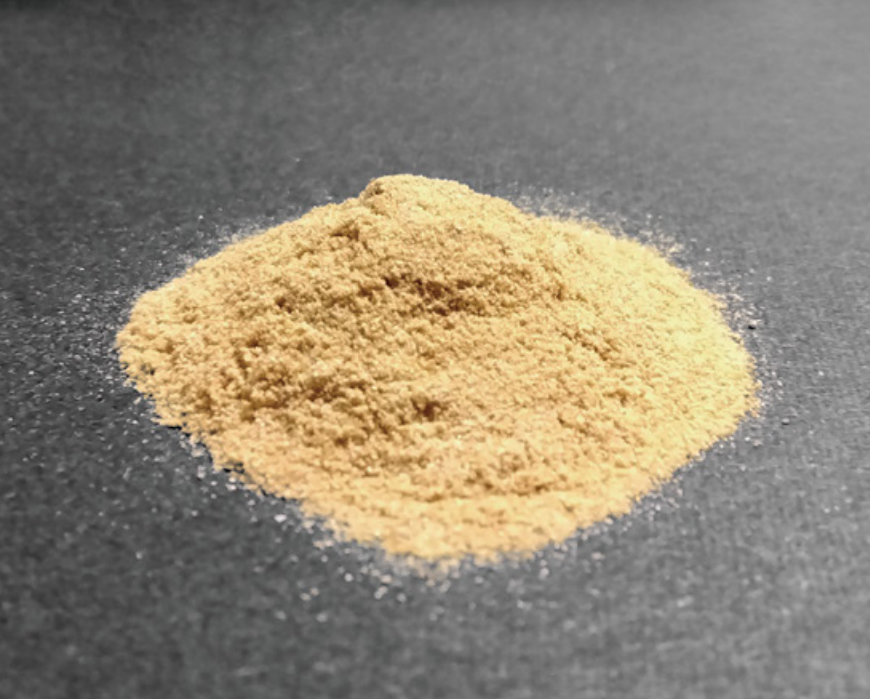
A specification, SDS, lot certificate of analysis, external laboratory report for heavy metals and arsenic, and a process description are available on request. Free 10 g samples are available for registered businesses.
46% fermented barley extract, with dextrin (38%) and glucose (15%) as carriers and 1% glycerin fatty acid ester. The barley comes from Australia and Japan and the seed koji from Japan; dextrin is from corn (USA, others), glucose from corn (USA, China, Argentina, Brazil, others), potato (Japan) or sweet potato (Japan), and glycerin fatty acid ester from oil palm (Malaysia, Indonesia, Philippines).
No. Although the fermentation process uses Lactobacillus crispatus, yeast and koji mould, the fermented extract is heat-sterilised at 110 °C for 15 minutes before freeze-drying.
Tablets, capsules, granules, foods and beverages, including pastes and powdered drinks. The powder is hygroscopic: the manufacturer packs it in aluminium bags, so plan moisture protection in your formula and final packaging.


